
Introduction
By 2026, generative artificial intelligence is becoming a central part of how people work, how businesses operate, and how everyday life unfolds. Industry projections point to a shift from simple content generation toward systems that can act, support decisions, and operate alongside humans.
This article looks at the main trends highlighted by industry experts for 2026 and explains why they matter for technology teams and business leaders.
Agentic AI becomes a workplace norm
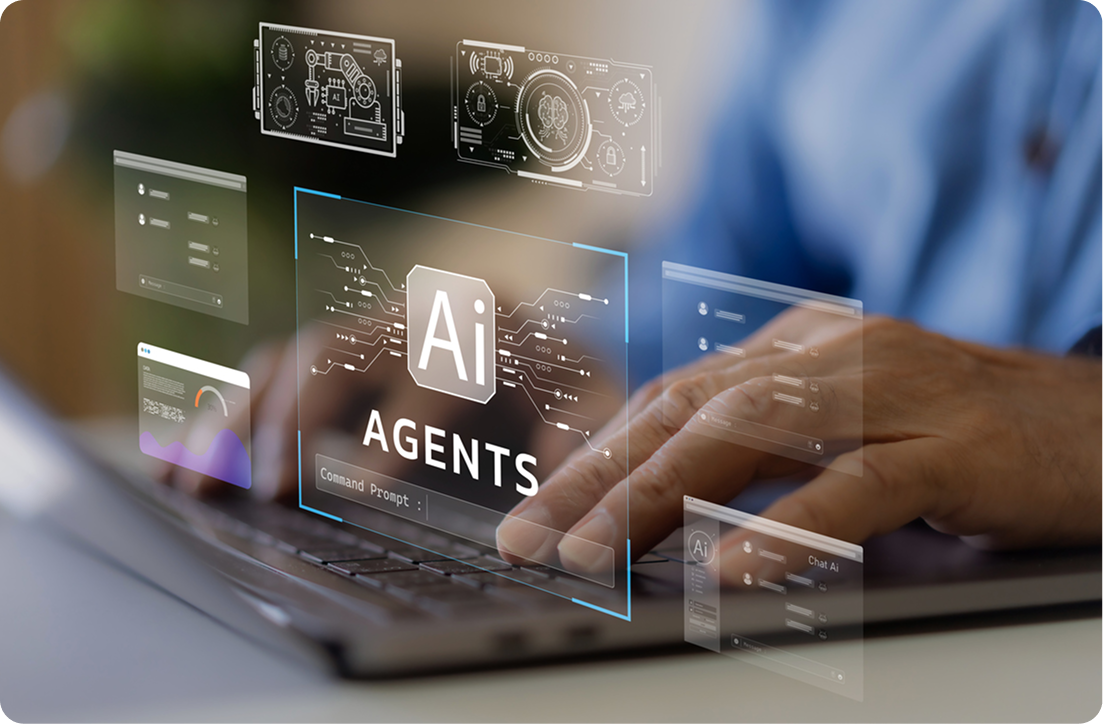
One of the clearest trends expected in 2026 is the rise of agentic artificial intelligence. These are systems that do more than respond to prompts. Instead they initiate tasks, manage workflows, and autonomously act on behalf of users or organisations. Across industry trend analyses, agentic AI is expected to change how productivity is measured by managing routine workflows, generating reports, and handling tasks that previously required direct human input.
This matters because responsibility and oversight in day-to-day work are changing. In 2026 generative AI won’t just be drafting text or creating images. It will be trusted to manage basic processes without constant human supervision. For organisations this means rethinking job roles, team structures, and how success is measured. Workers may focus more on strategy, evaluation, and oversight while AI agents handle repetitive or predictable work.
Generative AI in healthcare and personalised services
Healthcare is one of the sectors where generative AI is expected to have a noticeable impact by 2026. According to expert trend summaries, AI will be central to personalised medicine, predictive diagnostics, and care optimisation. This means patients may receive treatment plans tailored to their individual medical history, genetic profile, or lifestyle data, with AI supporting clinicians in designing those plans.
This shift is already visible in ongoing pilots and early deployments. Several research and development efforts are already underway, and continued investment from private and public sectors signals that 2026 may be the year when these tools reach broader clinical use. The implication for healthcare leaders is clear: data governance, ethical frameworks, and integration with existing clinical systems will be essential for safe deployment.
Read more about this topic in our blog: Generative AI in healthcare: progress, limits, and what comes next.
Multimedia creativity will evolve
Generative AI’s influence on creative work extends beyond text into multimedia content generation. Industry projections suggest that by 2026, generative systems will be common in producing images, video, and audio that rival human-led production in speed and flexibility. Tools that once required specialised technical skills will be accessible to a much wider audience, enabling smaller teams and individual creators to generate professional content quickly and affordably.
This trend has implications for entertainment, marketing, education, and more. It means creative industries will shift how they work, with AI assisting in everything from storyboarding to editing. Legal and ethical issues around authorship, copyright, and authenticity will also rise to the forefront, requiring new industry practices and standards.

Synthetic data enhances privacy and training
Generative AI models require vast amounts of data. In 2026, synthetic data is expected to become a major tool for training and validating models without exposing sensitive information. Unlike traditional data that comes directly from real users, synthetic data replicates real-world patterns while reducing privacy risks and regulatory concerns.
For companies building AI systems, this provides more practical options for compliance, especially in sectors like finance and healthcare. Synthetic data also improves model robustness because it can be used to generate rare or edge case scenarios that real data may not capture well.
Education and personalised learning
Another trend on the horizon is the integration of generative AI in education. By 2026, AI tools will provide individualised learning experiences that adjust to student needs, pacing, and learning style. Research and analyst reports suggest that AI will help educators design lessons, provide real-time feedback, and even assess student performance in ways that are more customised than current standardised systems.
This shift has the potential to improve learning outcomes and engagement, but it also raises questions about access and equity. Ensuring that all learners can benefit from these tools will require thoughtful integration within school systems and training for educators.
AI in gaming and immersive experiences
Generative AI is also beginning to shape creative and interactive work through new hardware. Smart glasses and lightweight AR devices are moving beyond experiments and into early real-world use. According to Mashable’s 2026 tech trends review, most major tech companies are now investing in smart glasses that combine cameras, sensors, and AI assistance directly into wearable form factors.
For creative work and gaming, this opens up new possibilities. Instead of creating content only on screens, designers and developers can work with AI-assisted overlays, spatial interfaces, and real-time prompts embedded into their physical environment. In gaming and immersive experiences, smart glasses could support more adaptive storytelling and mixed-reality interactions that respond to player movement and context, not just controller input. Adoption will likely be gradual, but creative work is beginning to move beyond keyboards and displays.
Robotics and AI companions begin to emerge
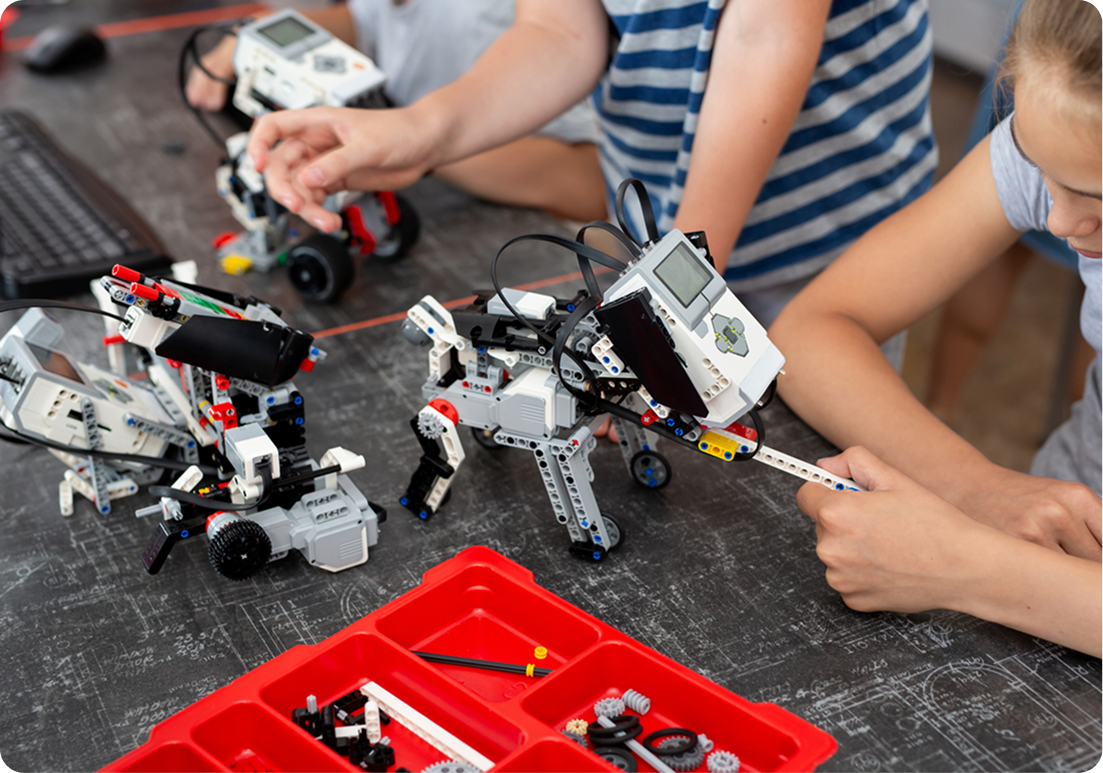
Once again as Mashable predicts, another shift expected around 2026 is the growing visibility of robotics paired with generative AI. Industry observers note an increase in humanoid robots, AI-powered helpers, and early physical companions entering controlled consumer and enterprise environments. These systems combine language models, computer vision, and sensors to interact more naturally with people.
This does not mean robots will suddenly become common in homes. Most early use cases will remain narrow and practical, such as logistics, events, assisted care, and structured workplaces. What matters is the direction. AI is starting to move from purely software into physical systems, which brings new questions around trust, safety, and predictable behaviour that teams will need to address carefully.
The human and social dimension of AI
While technology evolves rapidly, experts also emphasise the importance of human skills in the AI era. For example, fluency with AI tools is becoming a baseline requirement in many roles, while discernment and judgement remain uniquely human strengths. Some analysts predict that knowing when not to use AI may become as valuable as knowing how to use it.
While generative AI capabilities continue to expand, human judgement remains critical. As Forbes reports, experts expect that by 2026 organisations will place higher value on discernment, ethical reasoning, and the ability to interpret AI output in real business contexts, rather than simply producing content faster. The ability to decide when and how AI should be used is becoming as important as technical fluency itself.
Governance, trust, and regulation
As generative AI becomes more embedded in work and life, a focus on governance, trust, and regulation is emerging as a key theme. Organisations will need frameworks to manage how models are used, ensure transparency in decision making, and mitigate risks associated with bias and misuse. Analysts point to a growing demand for accountability structures that align AI development with legal, ethical, and societal standards.
Trust is not a technical feature alone. It involves clear communication with users, explainability of model behaviour, and mechanisms to address errors. These governance efforts will be a defining part of the 2026 AI ecosystem.
Economic and employment shifts
There are also broader economic shifts associated with AI adoption. Surveys and reports show that investment in generative AI is rising sharply as companies pivot from experimentation to production use cases. CIOs are allocating dedicated AI budgets and rolling out tools that aim to improve both cost efficiency and revenue growth
At the same time, workforce dynamics are shifting. Some industries are increasing hiring for entry-level and AI-related roles even as others restructure, reflecting the complexity of AI’s impact on employment patterns
Preparing for 2026
Taken together, these trends suggest that the next phase of generative AI will be defined by integration, autonomy, and real business impact. According to Forbes, many organisations are already shifting their focus from task automation to role transformation. By 2026, generative AI is expected to influence how responsibilities are structured, how productivity is measured, and how teams collaborate, particularly in knowledge based industries where decision making and context matter more than output volume.
The generative AI landscape in 2026 will be characterised by:
- autonomous assistants that augment productivity,
- personalised experiences in healthcare and education,
new standards of creativity and media production, - stronger privacy-preserving techniques like synthetic data,
- and an ongoing emphasis on trust and human agency in AI systems.
Understanding these trends is not optional for leaders thinking about the future. It is a prerequisite for designing systems that are not only powerful but responsible and aligned with real organisational and human needs.
As generative AI becomes part of everyday work, success depends on how well these systems are designed and integrated. At Ralabs, we support companies building AI solutions meant for real production environments.
More about our AI and machine learning services.