
Software maintenance
and production
support services

We provide software maintenance and production support for live web, mobile, and SaaS applications. Our scope covers L0–L3 incident management, monitoring and alerting, security patching, dependency upgrades, and ongoing software engineering support — with defined SLAs and structured escalation paths.

Key numbers

Years of providing services
6 +
Satisfied clients
60 +
Systems currently under support
2 +
Certified Professionals
50 %
Client NPS
60 %

Maintenance and support cases

Our clients say

Total reviews

45+

Average rating

4.9

Source

What is maintenance & support at Ralabs

We run maintenance and support as two parallel workstreams within a single engagement: incident response when issues occur, and engineering work between incidents to reduce how often they do.

Maintenance (proactive engineering work)

  • Dependency upgrades and framework updates
  • Security patching and CVE remediation
  • Performance optimization and system tuning
  • Compliance checks and audit preparation
  • Ongoing maintenance facilitation to keep systems up to date

Support (operational response)

  • L0–L3 incident management and escalation
  • Monitoring, alerting, and escalation workflows
  • Troubleshooting and root-cause analysis using logs & distributed tracing
  • Bug fixing, hotfixes, and system recovery
  • SLA-based response and resolution workflows

Support and maintenance services

Our application maintenance services cover the full post-launch lifecycle, from incident response to long-term architectural stability.

01

Help desk and incident management

Structured handling of production issues, alerts, and user-reported incidents with defined SLAs, severity-based prioritization, and escalation paths from L1 triage through L3 engineering response.

02

Monitoring and alerts

End-to-end observability across infrastructure and applications using Datadog, Prometheus, Grafana, and Sentry, with automated alerting, escalation workflows, and on-call coverage for critical incidents.

03

Bug fixing and troubleshooting

Root-cause analysis using logs, distributed tracing, and code-level investigation, followed by permanent fixes and regression validation.

04

Updates, patches, and upgrades

Framework updates, dependency management, OS patching, and infrastructure upgrades to ensure system reliability and security.

05

Security and compliance support

CVE tracking, vulnerability scanning (e.g. Snyk, Dependabot), RBAC reviews, and support for compliance frameworks such as HIPAA, GDPR, and SOC 2.

06

Performance optimization

Application and database performance tuning, caching strategies (Redis, Memcached), and infrastructure optimization based on measurable KPIs.

07

Documentation and knowledge transfer

Technical documentation, runbooks, incident playbooks, and architecture decision records, maintained throughout the engagement to reduce operational risk and support team continuity.

08

Architecture review and technical decisions

Where system health requires it, our engineers assess the existing architecture, identify structural issues, and recommend or implement changes — from database schema adjustments to service decomposition and infrastructure redesign.

AI-assisted managed support services

Production systems generate millions of log events, metrics, and traces every hour. Threshold-based alerting catches failures after they happen. AI-assisted tooling shifts that — processing observability data continuously so engineers spend less time finding the problem and more time fixing it.

Anomaly detection

Statistical models trained on your system’s own baseline metrics, not static thresholds. Latency spikes, memory leak patterns, and traffic anomalies are flagged before they reach users — surfaced inside your existing stack (Datadog, Grafana, or equivalent).

Root-cause analysis

Correlated log analysis and trace sampling across distributed services cuts the time from alert to diagnosis. Engineers work from a ranked signal set, not raw log volume.

Predictive maintenance

Historical incident data, deployment logs, and performance trends are analysed to surface maintenance tasks before they become incidents, scheduled as controlled work rather than emergency fixes.

L0–L3 support levels

We provide structured support tiers to ensure issues are resolved at the right level of expertise.

L0

Self-service support

Documentation, runbooks, and FAQs maintained by Ralabs engineers throughout the engagement — served through an AI-powered layer that resolves known issue patterns automatically and routes unresolved queries to L1 with context already attached.

L1

Operational support

Incident acknowledgement within SLA, initial triage, severity classification, and resolution of issues that don’t require code changes: service restarts, config rollbacks, access provisioning, and alert-to-ticket routing. Issues unresolved within the agreed window escalate automatically to L2.

L2

Application support

Hands-on investigation across the codebase, database, and integration layer: query plan analysis, API contract debugging, data consistency investigation, and log correlation across services. Each case closes with a root-cause report.

L3

Engineering support

Code-level fixes, hot-patch deployment pipelines, security incident containment, CVE remediation, performance regressions, and architectural changes where the system design is the root cause. L3 engineers also own technical debt reduction — converting emergency fixes into properly engineered solutions during the next maintenance cycle. Senior engineers and architects handle this tier directly.

How our support and maintenance services work

Ralabs runs two parallel tracks from the moment an engagement starts: a one-time onboarding sequence that transfers system ownership, and a repeating issue resolution cycle that runs continuously from go-live.

Onboarding process 

Typical duration: 1–2 weeks for standard products, 3–4 weeks for regulated or complex environments.

Application support

Ralabs runs two parallel tracks from the moment an engagement starts: a one-time onboarding sequence that transfers system ownership, and a repeating issue resolution cycle that runs continuously from go-live.

SLA agreement and runbook creation

P1–P4 severity targets, response windows, escalation contacts, and on-call rotation are agreed and signed off. Runbooks are created for critical failure scenarios before the first incident occurs.

Shadow mode

We observe incidents alongside your existing team for
1–2 weeks — learning your deployment pipeline, alerting setup, and system behaviour before taking independent ownership.

Handover and go-live

Ownership is formally transferred. Your team’s on-call rotation is removed from critical alerts. Ralabs becomes the first responder. Next track starts here.

Ongoing support process

Runs continuously for every incident and support request once
the client is live.

Request intake and triage

Every request enters a shared ticketing board — Jira, Zendesk, or your existing system. Classified by severity (P1–P4), assigned to the SLA clock, and routed to L1. P1 incidents trigger immediate L2/L3 escalation and a dedicated Slack channel within 15 minutes of acknowledgement.

Resolution at the right level

L1 handles restarts, config rollbacks, access issues, and known-pattern fixes. Issues unresolved within the agreed window escalate automatically to L2. L2 escalates to L3 when code changes or architectural decisions are required.

Root-cause analysis and permanent fix

We fix the root cause, not the symptom. Fixes are accompanied by a regression test and a brief RCA document that goes into the shared knowledge base, preventing the same issue from appearing three months later.

See what your support coverage costs

Configure your hours, day coverage, and reporting cadence. The estimate updates in real time.

Coverage Timeframe
EU Business Hours 9:00–18:00 CET
9h/day
US Business Hours 9:00–18:00 EST
9h/day
Custom Hours Configure below
8h/day
24/7 Coverage Round-the-clock support
24h/day
Day Coverage
Weekdays Only 08:00–20:00
5 days/week
Weekends Only 08:00–20:00
2 days/week
Full 7 Days 08:00–20:00
7 days/week
Reporting Frequency
Monthly
Every 2 Weeks
+$200/mo
Custom
+$400/mo

Price Summary

Monthly Price
$0
$0 / week
Monthly Hours 0h
Effective Hourly Rate $0.00
Cost Breakdown
Discounted price after 6 months
$0

Not sure what your support actually costs?

This estimate is based on standard rates. Your actual engagement may vary depending on stack complexity, SLA requirements, and team size. Want us to build a quote around your specific system?

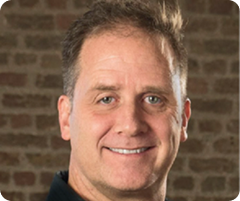
Yevhen Kulinichenko

Head of Technology at Ralabs

Why not in-house support?

Building an internal L1–L3 support function requires time, resources,
and ongoing investment.

 In-house teamRalabs
Time to first coverage2–4 months (hire, onboard, ramp)1–2 weeks (structured onboarding)
On-call outside business hoursRequires rotation and overtimeIncluded in SLA
Coverage across tech stackLimited to current team skillsMulti-stack engineering bench
Cost modelFixed headcount and benefitsPredictable retainer or T&M
Knowledge continuityBreaks on each departureDocumented, team-owned
Compliance experienceDepends on individual hiresHIPAA, GDPR, SOC 2 track record

How our services benefit your business

Reduce incidents and downtime

Proactive monitoring and maintenance help identify issues before
they affect users.

Keep engineering team focused

Your team can focus on product development while we handle operational support.

Improve resolution speed

Structured L0–L3 support reduces MTTR and ensures proper escalation.

Optimize maintenance costs

Preventive work reduces emergency fixes and long-term expenses.

Ensure system stability and compliance

We maintain secure, compliant systems aligned with industry standards.

Let’s talk solutions

    By submitting this form, you agree to our Privacy Policy.


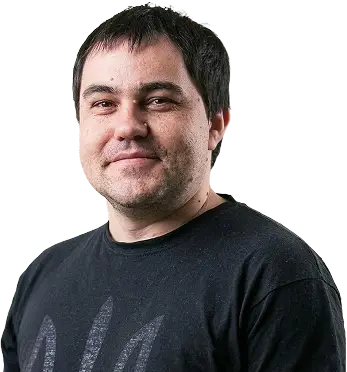
    Roman Rodomansky

    CTO & Co-Founder at Ralabs

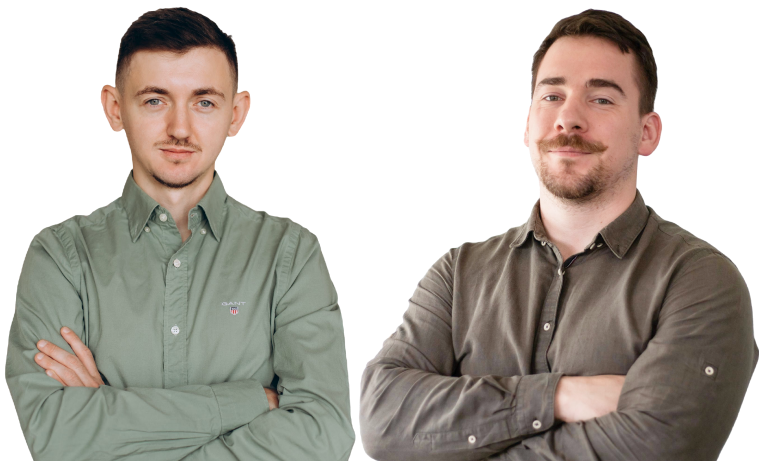
    Andrii Yasynyshyn

    CEO & Co-Founder at Ralabs

    FAQ​

    Software maintenance focuses on keeping the application stable over time. This includes bug fixes, updates, performance improvements, and security patches.

    IT support in this context refers to production IT support for live systems. It covers monitoring, incident response, infrastructure stability, and operational reliability. We do not provide end-user or office IT helpdesk services.

    Yes. Most of our software maintenance and production support work is for products developed by other teams or vendors.

    We start with a technical review to understand the architecture, codebase, infrastructure, and risk areas before taking responsibility for support.

    Typical scope includes:

    • Incident management and troubleshooting
    • Bug fixing
    • Updates and patches
    • Monitoring and alerts
    • Security and compliance support
    • Performance optimization
    • Ongoing software engineering support

    The exact scope depends on the product and engagement model.

    Response times are defined per severity level in the SLA. A typical structure: P1 (system down / data loss risk) — acknowledgement within 15 minutes, resolution target 4 hours. P2 (major functionality impaired) — acknowledgement within 1 hour, resolution target 8 hours. P3/P4 — handled within agreed business-day windows. Exact targets are confirmed during onboarding based on your product requirements.

    Yes. We often act as an extension of internal teams.

    This allows internal engineers to stay focused on roadmap and feature development while we handle maintenance, production support, and operational tasks.

    Costs depend on product complexity, tech stack, support tier (L1 only vs. full L1–L3), SLA response targets, and compliance requirements. For a typical mid-size SaaS product with L1–L3 coverage and standard SLAs, a dedicated team engagement starts from $3,000–$5,000/month. T&M engagements are priced per hour consumed. We scope precisely after the initial technical review.

    Yes. Many of the products we support operate in regulated environments where stability, security, and compliance are critical for day-to-day operations.

    We have experience supporting products in healthcare, fintech, and other compliance-driven industries.

    Our team regularly works in environments with strict compliance and security requirements.

    In practice, this includes experience with HIPAA and GDPR, where data privacy, access control, and audit trails are mandatory, not optional. We also follow structured delivery and change management practices aligned with SAFe, PMP, and Scrum Alliance (CSM) standards, which helps keep production changes controlled and predictable.

    On the infrastructure side, we work within cloud compliance frameworks and best practices through AWS Partner status and certifications such as AWS Solutions Architect and AWS Cloud Practitioner, as well as Google Cloud Partner programs. This means security, logging, access policies, and environment separation are built into how systems are designed and operated.

    Overall, this results in production systems where changes are documented, reviewed, and deployed in a controlled way, with security, audit readiness, and regulatory expectations considered from day one.

    Every engagement includes a defined reporting structure so you always know what’s being worked on and how the system is performing.

    This covers agreed SLA response times per severity level, monthly health reports with incident trends and cost breakdown, performance metrics tracked against baselines set at onboarding, and documented workflow s for every recurring process — from incident intake to change deployment.

    If you want to see the ticket queue, the deployment log, or the current maintenance backlog, it’s in the shared tooling.

    You got it right!

    Only 21% of people can identify an accessible visual.

    Your question