
Introduction
Healthcare platforms today are expected not only to deliver insights but also to safeguard sensitive patient data. That’s why HIPAA compliance is critical: without it, predictive analytics systems risk breaches, fines, and loss of trust.
At Ralabs, we help healthcare organizations build HIPAA-compliant platforms and AI-driven pipelines, turning predictive analytics into working solutions that already cut readmissions and forecast resource demand.
Across Europe, the Middle East, and the US, predictive models are being embedded into electronic medical records, hospital operations, and population health strategies. As the European Commission notes, AI can process massive datasets to detect disease patterns, forecast outbreaks, and tailor treatments.
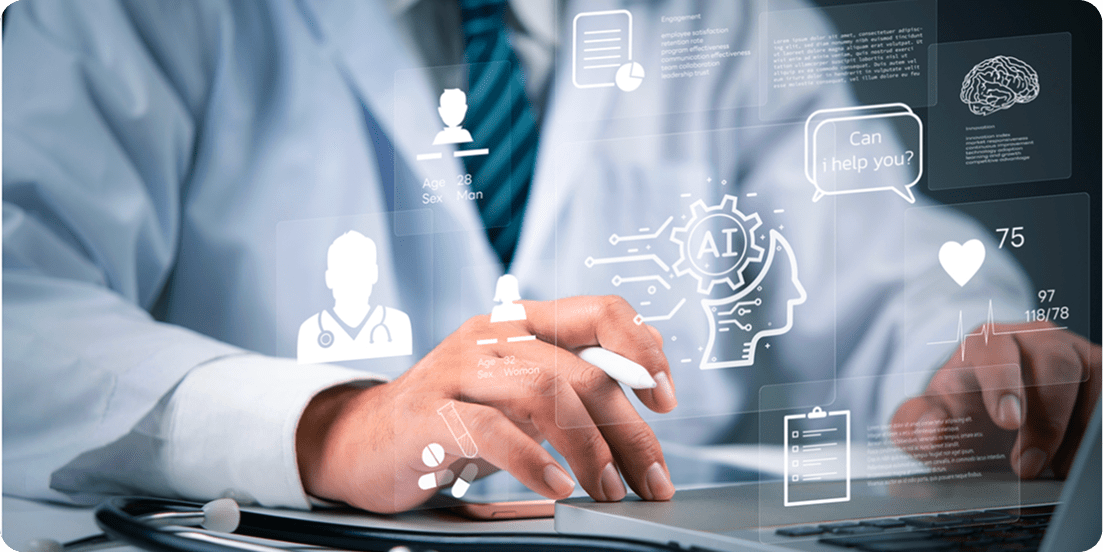
What predictive analytics means for healthcare
Electronic medical record systems are becoming intelligent platforms where predictive analytics is embedded directly into clinical decision-making.
Medical Device Network reports that AI-enhanced EMRs now provide real-time diagnostic assistance and evidence-based care pathways, helping physicians choose the most effective treatments at the point of care.
For example:
- Column-matching algorithms ensure that inconsistent data fields from different providers don’t derail onboarding.
- Predictive modules flag patients at risk of readmission before discharge.
- Automation of data validation reduces manual workloads for clinicians and administrators alike.
This blending of operational efficiency with clinical foresight is why healthcare predictive analytics is attracting attention not just from hospitals, but also insurers, governments, and digital health startups.
From electronic medical records to predictive platforms
The MENA region is positioning itself as a testbed for predictive healthcare systems. Saudi Arabia’s Vision 2030 and the UAE’s National AI Strategy 2031 both explicitly call for AI-driven health initiatives.
As the World Health Expo notes, predictive tools are being used to enhance diagnostics, improve billing accuracy, and streamline administration. Solutions like DeepDoc and Nash are already helping hospitals cut paperwork time and focus on patient outcomes.
This regional push is important. It demonstrates how government-backed AI strategies can accelerate adoption of predictive analytics in healthcare projects, particularly in fast-growing markets where health infrastructure is being modernized at scale.
The promise and the caution of generative AI
While predictive analytics has clear applications, the rise of generative AI in healthcare is more complex. TechCrunch reports that large language models are being tested for drafting radiology reports and summarizing patient records, but regulators and clinicians remain cautious.
Radiologists, for example, are experimenting with AI-generated summaries to speed up workflows, but emphasize that human oversight remains essential.
The lesson is clear: predictive models that focus on structured outcomes — risk scores, capacity forecasts, anomaly detection — are already mature and clinically useful. Generative systems, meanwhile, hold promise but require careful validation before they can be trusted in direct patient care.
- Early detection: Models trained on imaging and lab data can spot disease signals earlier than traditional methods, enabling faster intervention.
- Population health management: Hospitals can forecast flu outbreaks or chronic disease surges, adjusting resource allocation proactively.
- Operational efficiency: Predicting admissions and discharge rates helps optimize bed capacity and staff scheduling.
- Personalized medicine: Tailored treatment plans emerge from predictive analysis of genetic, lifestyle, and clinical data.
- Cost control: Wired notes that predictive analytics is key to shifting healthcare from expensive, reactive treatments to preventive, lower-cost care models.
Together, these uses demonstrate that predictive analytics is not a futuristic promise. It is already driving measurable improvements in both patient outcomes and financial sustainability.
Partner with Ralabs to build secure, scalable healthcare platforms – from AI-driven ETL pipelines to full-scale predictive systems trusted by providers worldwide.

COO at Ralabs
The remaining challenges
Despite the progress, barriers remain. Predictive models are only as strong as the data they are trained on. If training data contains bias, the predictions can be misleading. Cybersecurity risks also loom large, as predictive analytics requires sensitive patient data to be collected and processed at scale.
Regulatory bodies in the EU and US are working to set guardrails for AI in healthcare, ensuring transparency and accountability. The European Commission emphasizes that AI systems must align with strict data protection laws, interoperability standards, and ethical frameworks.
This balance between innovation and oversight will define how fast predictive analytics scales globally.
Why it matters now
Healthcare systems are under unprecedented pressure: aging populations, chronic disease burdens, rising costs, and workforce shortages. Predictive analytics offers a way to manage these pressures without simply adding more beds or staff.
By transforming EMRs into intelligent platforms and deploying forecasting tools, providers can shift from crisis management to strategic planning. The payoff is not just efficiency, but resilience: the ability to deliver care in the right place, at the right time, with the right resources.
How Ralabs helps
At Ralabs, we work with healthcare organizations to turn predictive analytics into working solutions. From building HIPAA-compliant platforms to creating AI-driven ETL pipelines that clean and validate patient data, our team specializes in making predictive systems operational and scalable.
- Learn more about our healthcare services and how we help providers build compliant, data-driven platforms.
- If you’re already running predictive analytics in healthcare projects but want to ensure scalability and performance, try our project health check audit. It’s a structured way to stress-test your system and identify bottlenecks before they impact patient care.
Conclusion
Healthcare predictive analytics is no longer a concept reserved for research papers. It is becoming a defining capability of modern healthcare systems: shaping everything from clinical decisions to national strategies.
The organizations that will succeed are those that don’t just experiment with AI predictive analytics in healthcare, but embed it into their core operations with the right safeguards. At Ralabs, we see this shift firsthand in our work with healthcare clients across different regions. The future of patient care is predictive, and the time to act is now.
Read more about this topic in the interview with a Senior LLM Engineer at Ralabs.