Enterprise n8n Adoption, Tested Live: Valencia’s Second Community Hackathon
Published: September 22, 2026
5 min read
The latest update: September 25, 2026
Roman Rodomansky
Co-Founder & COO at Ralabs, n8n Official Ambassador, Claude Community Ambassador
Introduction
Back in April, I ran Valencia’s first n8n meet-up — talks, real cases, and a room full of people who stayed long after the speakers finished. It worked, and it told me there’s a real automation community here. For the second event, I wanted to build on that with a different format: one where people don’t just hear about automation; they build it themselves.
That became a mini-hackathon at La Harinera.
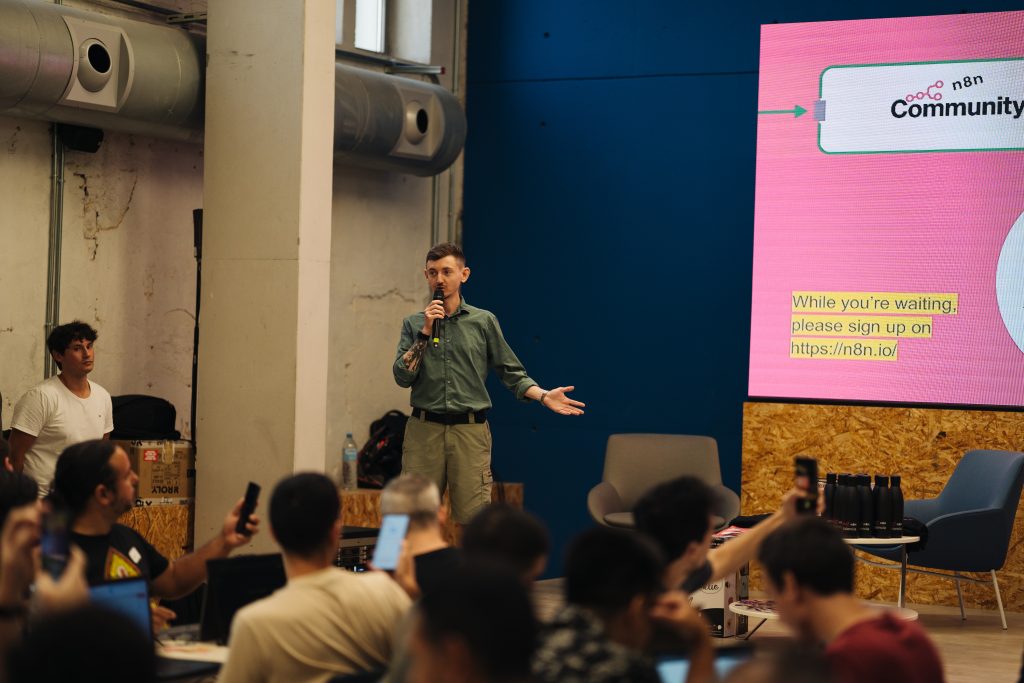
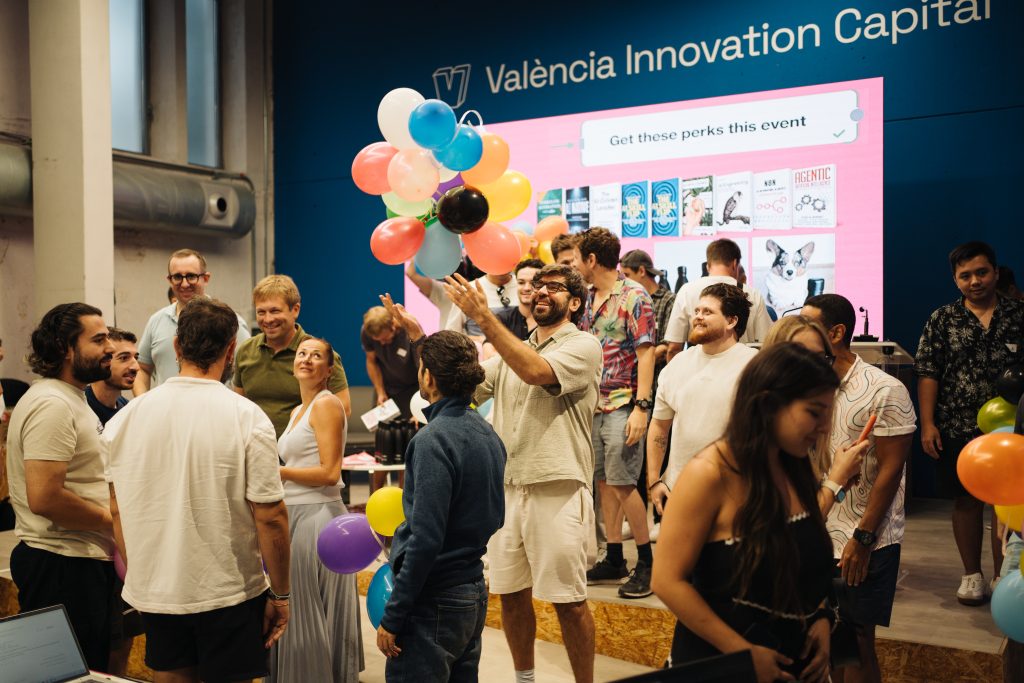
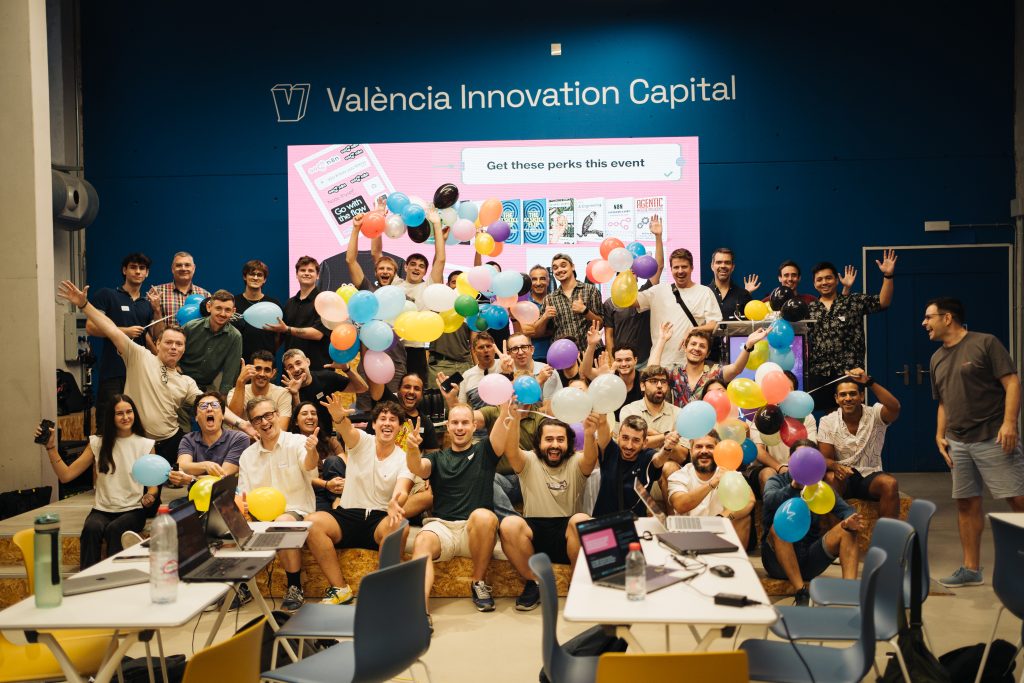
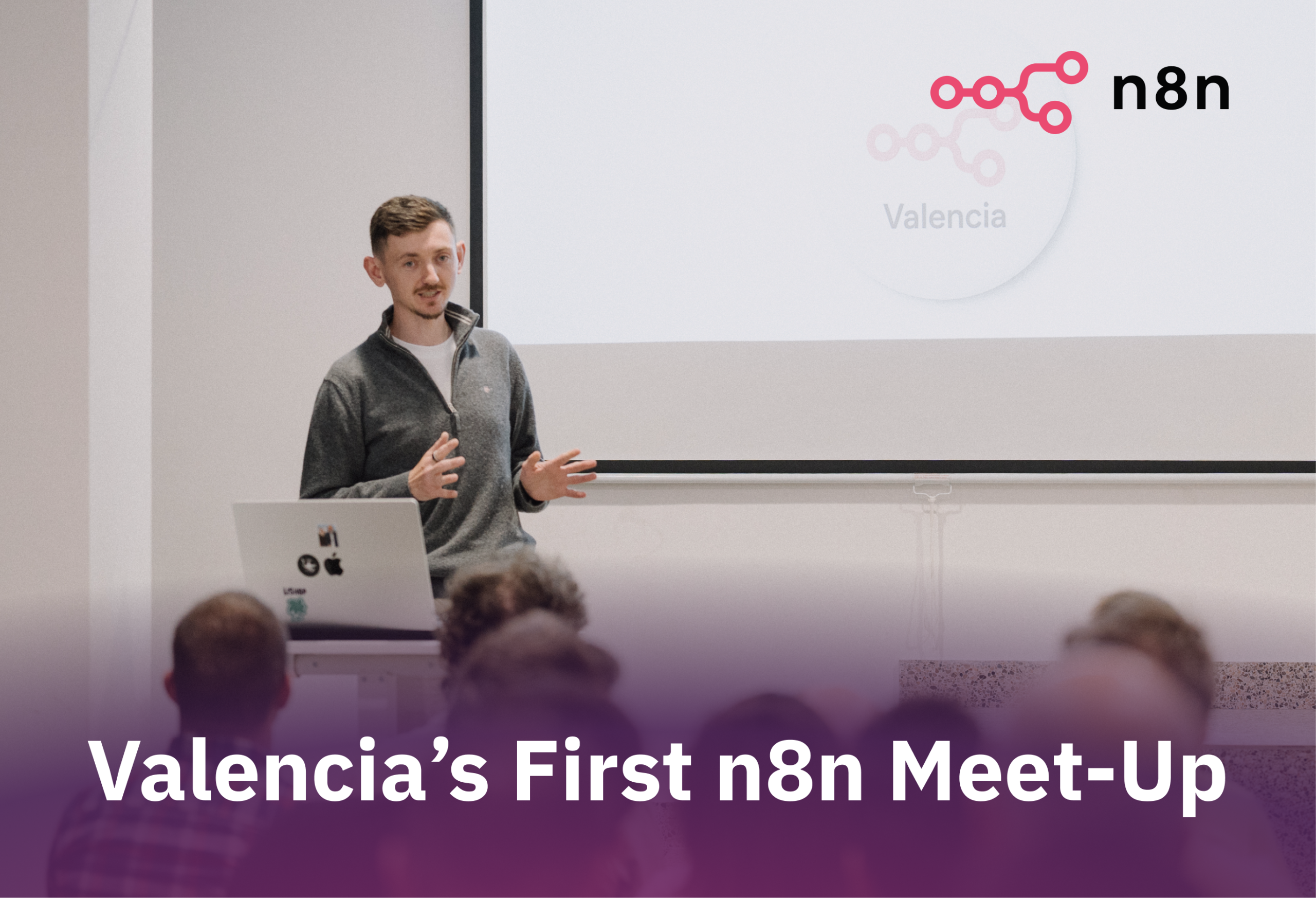
Opening the hackathon at Valencia Innovation Capital. Eighty people, sixteen teams, ten challenges, two hours
Where the idea came from
The format isn’t new to me. Years ago, in my physics-and-math lyceum in Ukraine, we ran algorithmic problem sessions where every team that solved a challenge got a helium balloon — simple, competitive, a little silly, and easy to spot who was ahead. I never forgot it, and it was the obvious inspiration when I started planning this event.
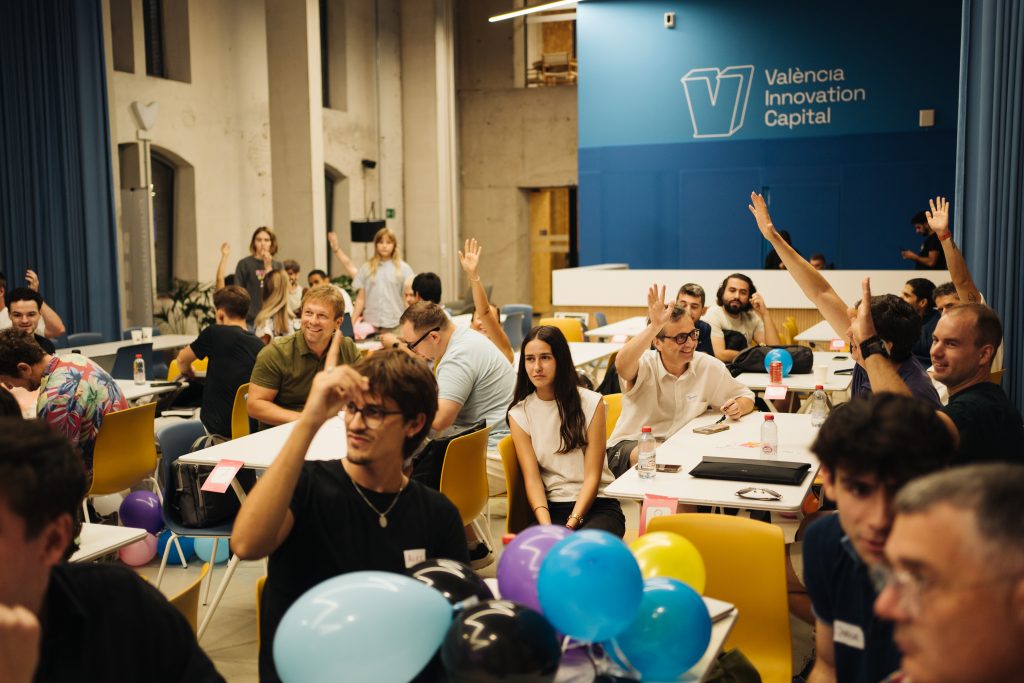
80 builders, 16 teams of four to five, skill levels deliberately mixed at every table
I found a great space at Innovation Capital / La Harinera, and built a full site, describing every challenge in detail, so people would know exactly what they were signing up for.
Want to try the challenges yourself?
All 10 are live ob the site – solo with your team, no event required.
The first meet-up pulled 186 sign-ups. This time, the venue capped us at 80–90 people, and again, demand ran more than double what we could actually host. About 80 people showed up on the day, split into 16 teams of 4–5. The room was Ukrainian, German, Spanish, and French, and mostly non-technical — somewhere around 10% were experienced engineers. We deliberately mixed skill levels at each table, so no team had a cluster of experienced builders steamrolling the challenges while everyone else watched.
How the hackathon worked
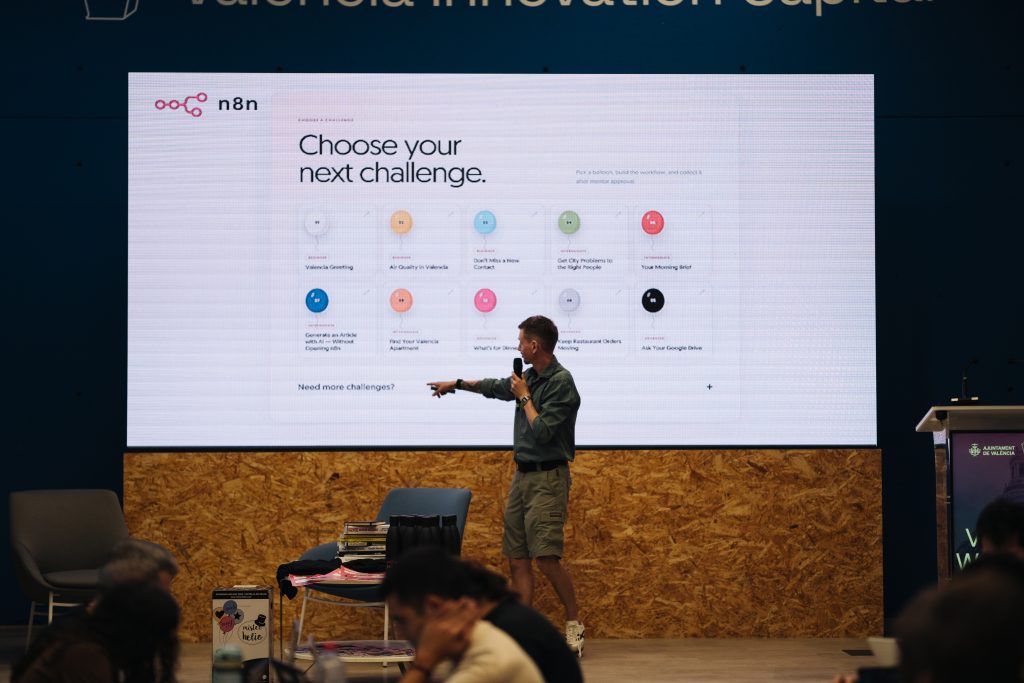
Ten challenges, each with a base task and a bonus task, so a team could earn up to two balloons per challenge, 20 in total if they cleared everything. Every challenge page on the site laid out the steps to follow, which nodes to use, five progressive hints if you got stuck, and even a ready-made workflow to copy if you needed a starting point.
Roman walks the room through the ten n8n challenges
We sequenced the challenges from beginner to advanced:
The basics: things like setting up a simple URL page or building a form that sends submissions straight to an inbox
Everyday automation: a Telegram bot that posts Valencia’s daily air quality, a morning digest of today’s tasks pulled from Trello or Notion
AI-routed workflows: an agent that reads citizen requests and automatically routes them to the right department: police, roads, public services, or waste
Connecting n8n to AI itself: linking n8n to tools like ChatGPT, Codex, or Claude so workflows can be generated automatically
Real-world data: scraping Idealista for apartments or building a Telegram agent that takes a dish name, works out the ingredients, looks each one up through an MCP server wired to Mercadona’s API, and returns the total with the stock checked
The hard ones: a workflow that survives a restaurant order system dropping connections at random, and a RAG chatbot answering questions from documents in Google Drive
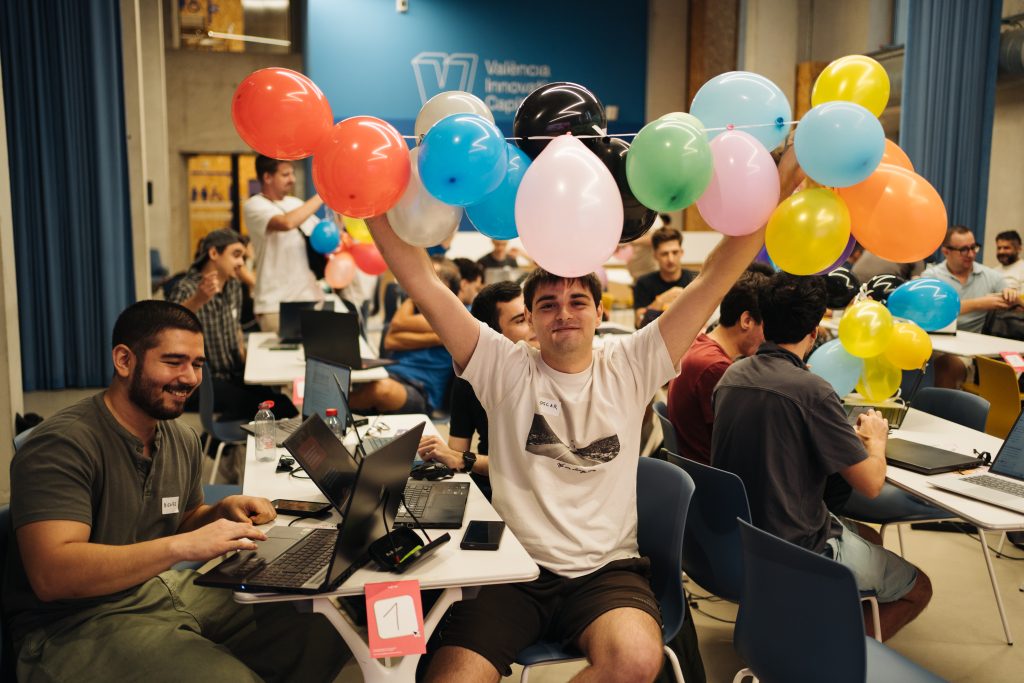
Table 1, most of the way through the board
Two teams cleared every single challenge. A handful of others came close. Both winners did the same thing, and neither of them did it by hand.
Before touching a single challenge, each team connected n8n to their own AI chat — one used ChatGPT, the other Claude — through MCP. From there, they didn’t build workflows node by node. They described what they wanted, and the model built it. Ten challenges, twenty balloons, almost entirely prompted into existence.
That’s the pattern worth paying attention to, and it had nothing to do with who was technical. We randomised teams so each table got exactly one strong engineer. One of the winning teams was product marketers, entrepreneurs, and one engineer. Most tables looked roughly like that. Across sixteen teams, how technical someone was didn’t predict where they finished; what predicted it was whether anyone at the table already knew how to wire an AI assistant into the tools they used.
Every strong engineer I watched clear challenges fast had that same habit. They knew what MCP was. They’d already connected their assistant to Jira, Asana, Trello, GitHub. In a two-hour hackathon that’s worth a lot. In a company, it’s worth considerably more.
Two hours, sixteen tables, and a scoreboard made of helium
Prizes, helium, and the small stuff that made it fun
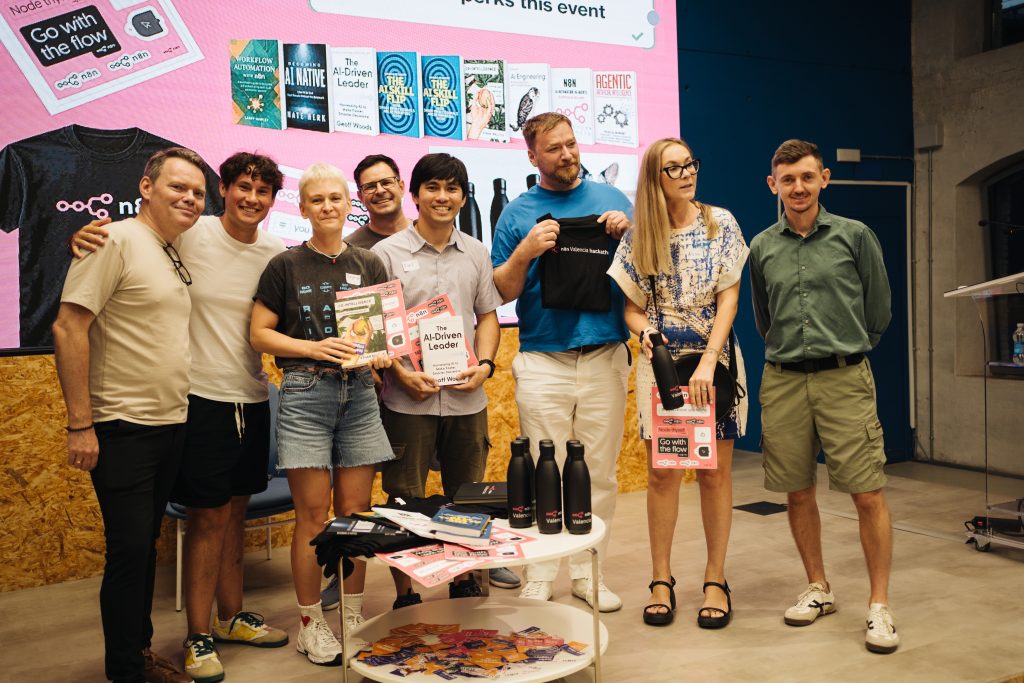
Two hours, then winners. Top teams got first pick from a table of books, t-shirts, and other swag, and the helium balloons stuck around as a fun keepsake for the win.
The end of two hours, with the books and t-shirts going first
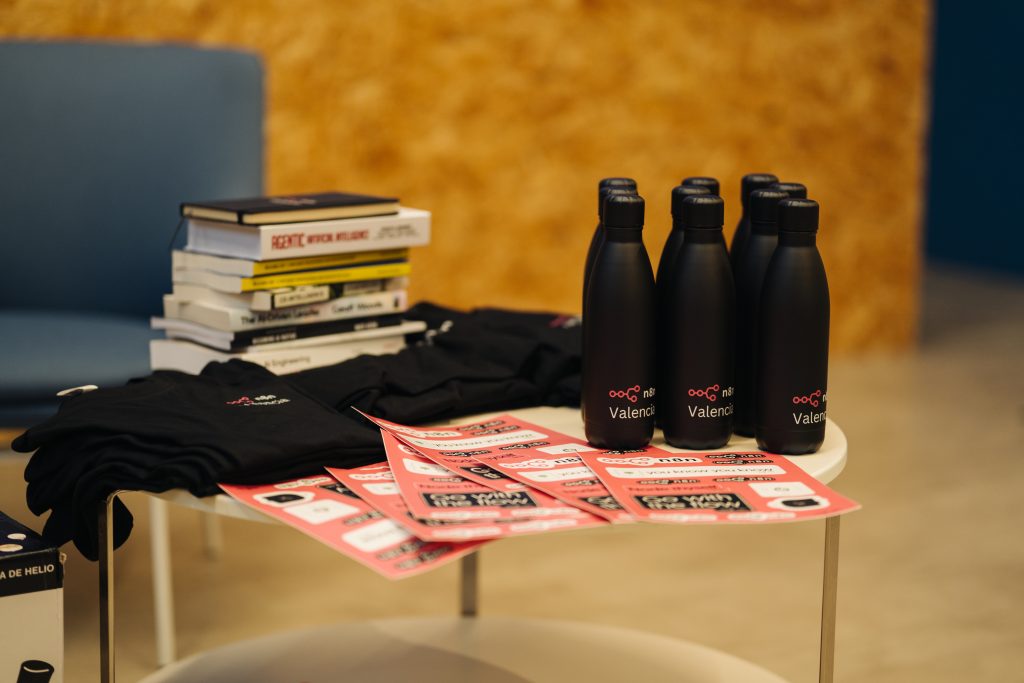
The prize table: n8n Valencia bottles, t-shirts, sticker sheets, and a stack of books on AI and workflow automation. Top teams picked first
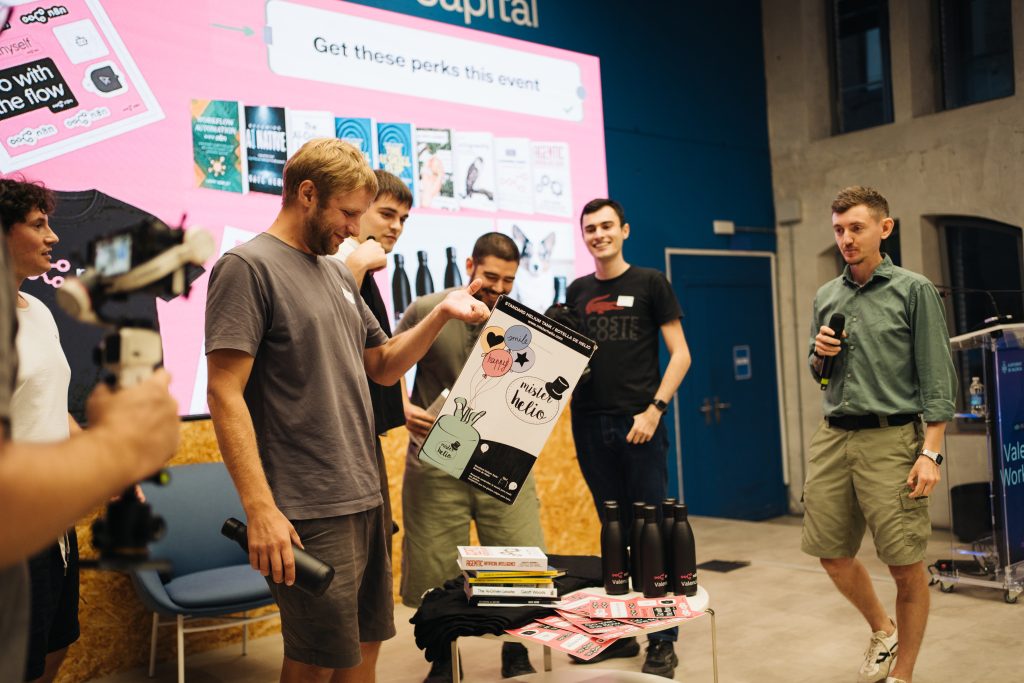
One of the winning teams collecting the helium kit — the source of the balloons, and the reason the scoreboard was visible from across the room
Open for anyone to reuse
The entire site, every challenge, hint, and workflow, is open source on GitHub. If you’re organizing an n8n event anywhere else, you can fork it, adapt it, or contribute your own challenge back. The goal was never for this to be a one-off; it’s meant to be a template other organizers can run with.
What stood out to me, and why it matters for enterprise automation
n8n opens workflow automation up to people who’d never call themselves engineers — product managers, ops folks, marketers. That’s the shift I keep seeing in enterprise n8n adoption: no code required, real results in hours rather than sprints.
Everyone who made it in, at the end of two hours. The balloons are the scoreboard.
This room was a small-scale preview of a pattern I see across the enterprise automations I build for clients. Low-code lowers the barrier to entry. Scaling it safely across departments — security, compliance, integration with the systems a company already runs — is where teams bring in a dedicated engineering partner. A citizen-request router built by a marketer in two hours isn’t a toy. It’s the same building block behind the enterprise automation work we do: routing support tickets, approvals, and compliance checks across departments at production scale.
The platform itself holds up under that weight: self-hostable, GDPR-compliant, and built for the security posture that regulated enterprise workflow automation needs. We saw that play out on a recent integration project for a global pharmaceutical company, where we connected enterprise platforms while meeting healthcare-grade compliance requirements: n8n handled the compliance-ready groundwork, and our team handled making it work end-to-end across everything they were already running.
Non-technical participants shipped a working Telegram bot or a RAG chatbot in under two hours. That’s a fair measure of how far low-code takes you on its own. Turning that same logic into something production-grade and compliant is a different job, and it’s the one we do every day.
Ralabs builds low-code and no-code automation pipelines across industries - from fintech and healthcare to logistics, media, cybersecurity,
and beyond.
People are already asking when the next one is. Given how much demand outpaced capacity again, there will be a next one on 19 October. Registration opens shortly — if you’re in Valencia and want in, follow along for the announcement.