A lot of what I’ve been reading lately circles around the same themes: AI creeping into core engineering workflows, the cost of complexity, and tools trying to fix problems we’ve mostly created ourselves.
Below are a few things that stood out – some practical, some opinionated, and a few worth debating.
Signals from Engineering
Continuous documentation as a discipline, not a chore
Documentation usually breaks because it’s treated as a one-time task. I like the idea of continuous documentation tied to code changes – boring in the best possible way, and actually sustainable.
Ephemeral environments for testing GitFlow
This is one of those ideas that sounds obvious once you’ve used it.
Spinning up short-lived environments for testing branches can remove a surprising amount of friction from delivery.
SBOMs are becoming a necessity, not bureaucracy
We recently had a client ask about generating SBOMs, and it makes sense. As companies grow, knowing what licenses and dependencies you actually run becomes a risk management problem, not a compliance checkbox.
Monorepos, microservices, and complexity fatigue
I’ve never been a big fan of microservices for their own sake. Monorepos, when done well, feel like a corrective swing back toward simplicity.
Stack Overflow, then and now
With all the talk about Stack Overflow’s decline, it’s worth revisiting how simple the system actually was.
A good reminder that complexity is often a choice.

Is it still worth pursuing a software startup?
The answers here are less optimistic than they used to be but also more honest. Building software companies is harder, more crowded, and still very possible if expectations are realistic.
AI in Practice
Moltbook Chaos
It took less than 72 hours for Moltbook to crash and burn. A vibecoded, unsecured tool combined with real user data turned out to be a dangerous mix, with large amounts of data lost almost immediately. Within hours, the system was overwhelmed by spam, scams, and security issues, and quickly manipulated for profit. It’s a reminder that hype spreads much faster than understanding, and anything that can be manipulated eventually will be.

AI and legacy code are finally meeting
IBM on AI-driven legacy refactoring
Legacy systems aren’t going away, and pretending they will is usually how companies get stuck. AI-assisted refactoring feels like one of the first genuinely practical uses of AI in engineering not replacing teams, but helping them move faster through code that nobody wants to touch anymore.
If you generate code with AI, DSPy is worth a look
If teams are serious about AI-generated code, prompt engineering alone won’t scale. DSPy feels like an attempt to bring structure and reproducibility into AI workflows, which is exactly where things tend to break first.
Context-aware code reviews
Code reviews are less about syntax and more about context. Tools that understand the broader change, not just the diff, are moving in the right direction.
Vector databases as a primary store
Using vector databases as a primary data store is still controversial, but it’s clearly being explored seriously now.
Worth watching how this plays out beyond AI demos.
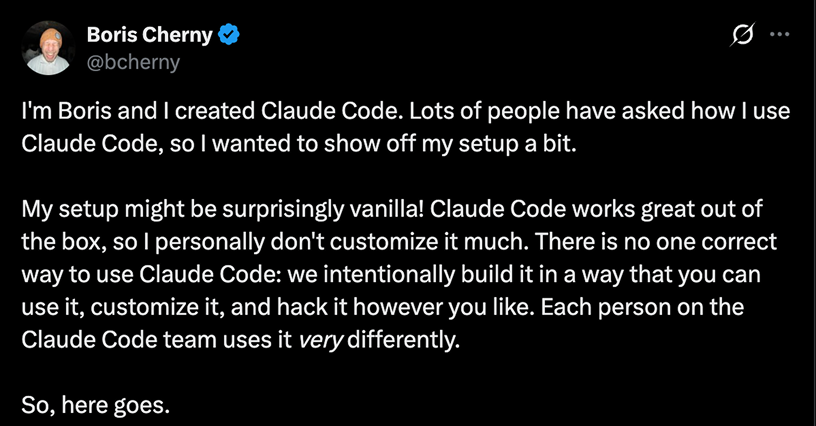
How the creator of Claude Code actually works
I always find real workflows more interesting than polished demos. This is a good example of how AI tools are actually being used day to day by people building them.
Which AI lies best?
A game theory classic that requires betrayal to win, now used as a benchmark for AI deception.
It’s unsettling in a useful way especially as agents become more autonomous.

Does agentic coding actually work?
I like that this discussion is less about promises and more about evidence. Agentic coding is clearly improving, but the gap between demos and reliable production workflows is still real.
How engineers actually do RAG locally
158 takes, no consensus which is probably the most honest state of things right now.
Worth skimming if you’re experimenting with local or private RAG setups.
Agent skills leaderboard
Interesting to see agent capabilities compared more systematically, not just marketed.
Signals from the Industry
OpenAI, Musk, Altman again
This feels less like a legal story and more like a reminder of how young and unsettled the AI industry still is.
ChatGPT Health
Healthcare keeps coming up as one of the most promising and most sensitive areas for AI. The tooling is moving fast adoption and regulation will be the real test.
Preply reaching unicorn status
A strong story, and a reminder that Ukrainian companies continue to scale globally, even under pressure.
Data is still the moat
Models are becoming cheaper and more accessible. What you can do with your own data and how well you understand it still matters more than which model you picked.
AI healthcare gold rush
There’s a lot of money and optimism in AI healthcare right now. Execution and trust will decide who lasts.
RaaS as a direction for SaaS
“Results as a Service” is an interesting framing. Less about selling tools, more about selling outcomes easier said than done, but directionally right.
Google MedGemma and MedASR
Once again, medicine is where AI shows very real value. Image analysis and medical speech-to-text feel like problems AI is actually well suited to solve.
Don't fall into the anti-AI hype
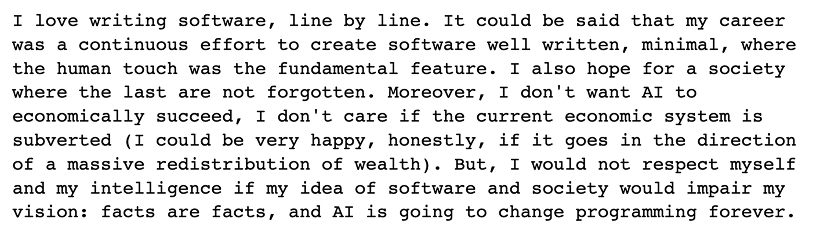
The next two years of software engineering
A grounded look at where things are likely heading. Less “AI will replace engineers” and more “engineering workflows will keep changing in uneven, sometimes frustrating ways.”
Human Side of Engineering
Logging still sucks
No comment needed. If you know, you know.
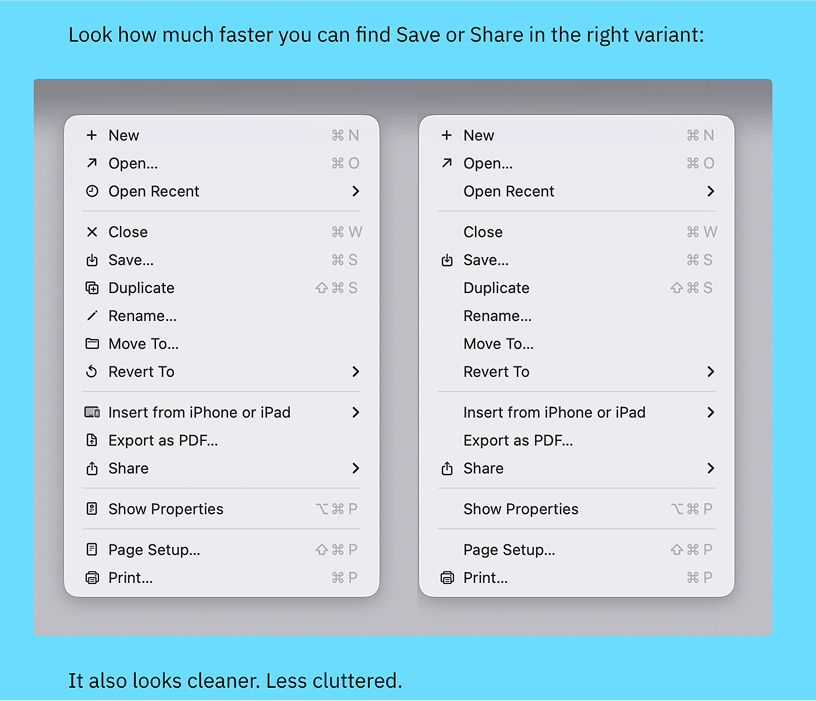
macOS icons and visual noise
Curious what designers think about the new macOS design. Black and white icons look cleaner, but I’m not convinced they help you find things faster. Adding more icons everywhere feels like visual noise, not clarity.
React best practices as an agent skill
This is an interesting direction encoding best practices directly into tools, not documentation.
Loneliness, technology, and unintended side effects
Not directly about software, but very relevant to the world we’re building tools for. Technology shapes behavior in ways we don’t always measure.
Being "useful" as an engineering addiction
This piece resonated more than I expected.
The idea that many of us tolerate dysfunctional systems because they align with our own need to feel useful feels uncomfortably accurate. It’s an unusual but honest take on why software engineering still works for many people, despite its flaws.

From my side
Conferences and knowledge sharing
I’ll be speaking at a few conferences this year. The one we’re actively preparing for is Kyiv AI Day on March 7th. The event is in Ukrainian, and I’d be happy to meet fellow Ukrainian colleagues in Kyiv.
If you know of other interesting AI-related events, feel free to recommend them. I’m very much in my knowledge-sharing era.
https://aiconf.com.ua/kyiv
Old-school notes
For my last internal tech talk, I took notes the old way pen and paper. Writing by hand slows me down, helps me filter better, and remember more.
Maybe not everything needs to be optimized. Or maybe I’m just old-school 😊
Curious if anyone else still does this.

Books and Reading
No Country for Old Men – Cormac McCarthy
I picked this up after reading a note about it in Max Ischenko’s newsletter (https://www.linkedin.com/in/maksim/). I’ve always liked the movie, so I was curious how close it was to the book.
First, hats off to the Coen Brothers. This is, without exaggeration, one of the most accurate movie adaptations of a book I’ve ever seen. Almost all the action and characters are there. The only noticeable difference is a hitchhiker girl who appears at the end of the book but not in the film. If you read the book after watching the movie, I’d even recommend keeping the film open and jumping to the scenes you’re reading the accuracy is impressive.
Second, the book itself is excellent. McCarthy’s style isn’t easy: very long sentences, no quotation marks for dialogue, and minimal punctuation. If you have the patience to get past that, you’ll find a lot of sharp action, strong dialogue, and a clear existential view on life running through the story.
Amazing book. Highly recommended.

Roll-ups section
A few things worth noting from our side:
- We’re seeing growing demand for AI that supports real delivery work, not demos. This includes AI-assisted quality checks, internal tooling, and shared knowledge sessions where teams exchange practical AI usage patterns rather than abstract ideas.
- As we scale, operational maturity is becoming a recurring theme in conversations with clients. Topics like SBOMs, delivery readiness, support and maintenance models, and long-term platform sustainability are coming up more often than pure feature development.
- Feedback from clients continues to highlight strong execution and open collaboration as core strengths, while speed and UI/UX consistency remain areas where teams expect continuous improvement – often with help from better tooling and AI-driven workflows.
Open Positions at Ralabs
We continue to grow and regularly open new roles across engineering and delivery. You will find the current list of open positions below.
If something here sparked a thought or disagreement, feel free to reply. I read every response.
My newsletter is also published as a blog on our website – Ralabs Blog. You can now read the previous updates there. Lastly, as a company with deep Ukrainian roots, we continue to seek your support for Ukraine during these challenging times. Every contribution makes a difference.