Key takeaways
- n8n held In The Loop 2026, its first flagship conference, at Wilhelm Studios in Berlin on October 13–14, 2026.
- Roman Rodomansky, COO & Co-Founder of Ralabs and an official n8n Ambassador, sees the conference as a familiar open-source move: Docker, Elastic, HashiCorp and GitLab all went from community to flagship conference on their way into the enterprise.
- The message was enterprise. n8n reported that more than 60% of the Fortune 500 use it and that 6.7 million workflows are active on the platform.
- The product news was about running automation safely at scale: centralized credentials, multi-instance monitoring, OpenTelemetry, agent identities, workflow reviews, and a native SAP Joule Studio integration planned for Q1 2027.
- Roman Rodomansky noticed that the event was seldom about AI models. The conversation was about orchestration, governance and proof of value.
- The production stories carried the event: Mercedes-Benz, a German city administration under strict GDPR, n8n’s own AI SDR, and BCG on where automation actually makes money.
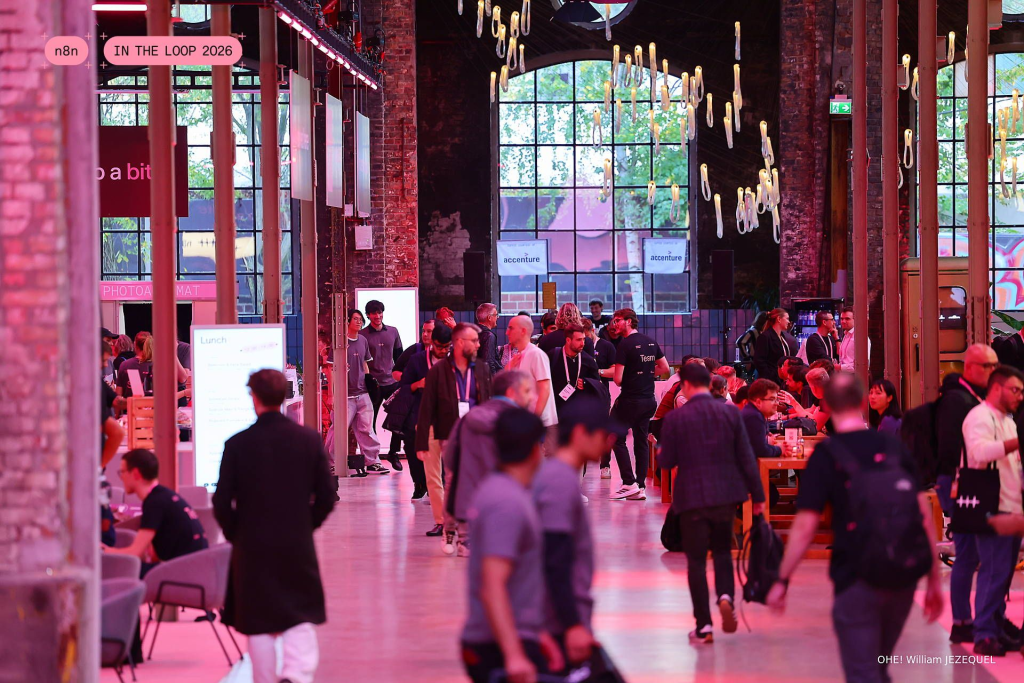
I spent two days at n8n In The Loop 2026, n8n’s first flagship conference in Berlin. As an official n8n Ambassador, I’ve run Valencia’s n8n community events since our first meet-up in April. Berlin showed me the same story at company scale.
The thing I keep coming back to isn’t a product launch. It’s what nobody talked about. Models. No debate about which LLM to pick. By the end of the first day, I had stopped expecting one.
What people did talk about is less exciting and much more expensive to get wrong. How do you run automations and AI agents inside a large organization without losing control? If you are evaluating n8n for enterprise use, that is the question that matters. Building an agent is no longer the hard part. Getting it into production, governing it and proving it earns money is.
What was n8n In The Loop 2026?
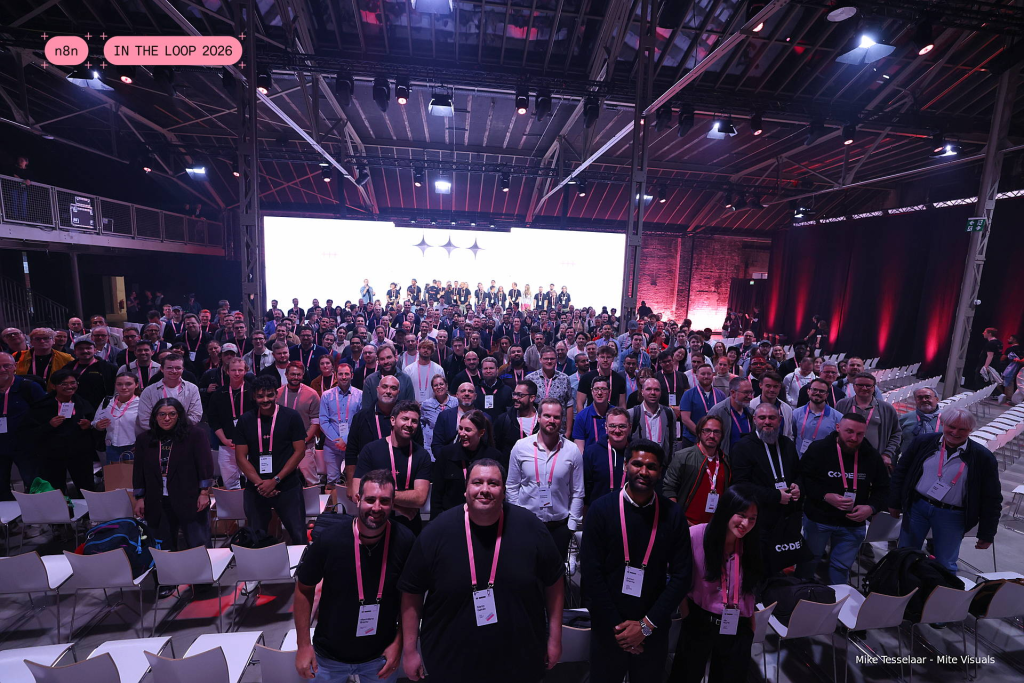
n8n In The Loop 2026 was the first flagship conference of n8n, the Berlin-founded workflow automation platform. It took place on October 13–14, 2026, at Wilhelm Studios in Berlin. October 13 was an invite-only Partner Day, and October 14 was Ecosystem Day, open to builders, customers and partners. I took part in both days.
The numbers n8n shared on stage:
| Metric | Figure | Source session |
|---|---|---|
| Fortune 500 companies using n8n | More than 60% | Jan Oberhauser (CEO), Ben Kiziltug (VP of Sales) |
| Active workflows | 6.7 million | Jan Oberhauser |
| Ambassadors worldwide | 340 | Jan Oberhauser |
| Community events in September | 72 | Jan Oberhauser |
| Customer growth, last 12 months | 3x | Ben Kiziltug |
| Average workflows per organization after one year | 245 | Ben Kiziltug |
| Enterprise clients coming through partners | 15% | Jan Oberhauser |
| Higher chance to buy when a client comes through an event or partner | 30% | Jan Oberhauser |
What did n8n announce, and why are models missing from it?
The short answer: n8n’s roadmap is built around control, and the model is one part you can swap.
n8n now describes itself as an orchestration layer. Hugues Vincent, Head of Partnerships, framed it as a market bet: every product will need AI orchestration. The roadmap follows that bet:
Rebuilt agents. n8n agents now run as a harness. They support tools and MCP, can loop, and can be tested automatically. I want to try this one hands-on.
n8n Connect. A new system for managing credentials. David Roberts, VP of Product, said adding credentials is the most painful step for users.
Manifest. A dashboard to monitor automations across multiple n8n instances, with plans to cover automations built outside n8n.
OpenTelemetry support for monitoring.
Agent identities. Agents get their own identity or run under the identity of the person using them.
Workflow reviews before a workflow is published.
SAP Joule Studio. A native n8n integration is planned for Q1 2027.
Roberts also shared adoption data. Workflows created through chat reach production 90% of the time. Users who work through MCP are three times more likely to succeed. That matches what I saw at Valencia’s second community hackathon: both teams that cleared every challenge had connected n8n to an AI assistant through MCP.
Roberts described the automation lifecycle as build, audit, deploy, monitor, manage. His case against plain scripts was concrete. Run raw code and you lose step-level observability, the ability to resume where a run failed, and automatic retries.
Security came up again and again in the product sessions. n8n’s argument for sensitive environments is that its code base is public, so the community reviews it. There was a useful reality check too. Albert Alises, Senior AI Engineer at n8n, added a note of caution in his session on building a super agent. His point: you can build a beautiful harness, but it might be very expensive to run.
This is where the missing model talk makes sense to me. Even the session on building automations from a chat app, which connected Claude through n8n’s multi-instance MCP, was about access scopes and projects. The model was a detail. When a vendor’s roadmap is identity, credentials, review gates and telemetry, the model becomes a replaceable part. Control is what stays.
What does running n8n in production look like?
In the sessions I attended, it looked more like governance than building. Each product or organization gets its own instance, data stays on-premise, and workflows get documented so others can reuse them.
Mercedes-Benz: n8n as the company's AI training ground
Michael Deptuch, Head of AI Ecosystem at Mercedes-Benz Group, said the company uses n8n as a low-code tool to teach employees how AI works. Data, connections and flows sit in one place. The rollout started in May 2026 with an internal three-day hackathon.
Each product or organization gets its own n8n instance. The company has trained 5,000 employees and built many predefined nodes. Earlier, Ben Kiziltug had mentioned that 1,500 Mercedes employees already use n8n in core processes.
Mercedes doesn’t care where agents are built. Its open problem is orchestration: how agents talk to and approve for each other, and who is accountable for the result. Deptuch noted that the technical side is easy. The hard part is trust and responsibility. That’s the question I hear most often from CTOs right now. It was good to hear a company of this size say it out loud.
A German city administration under strict GDPR
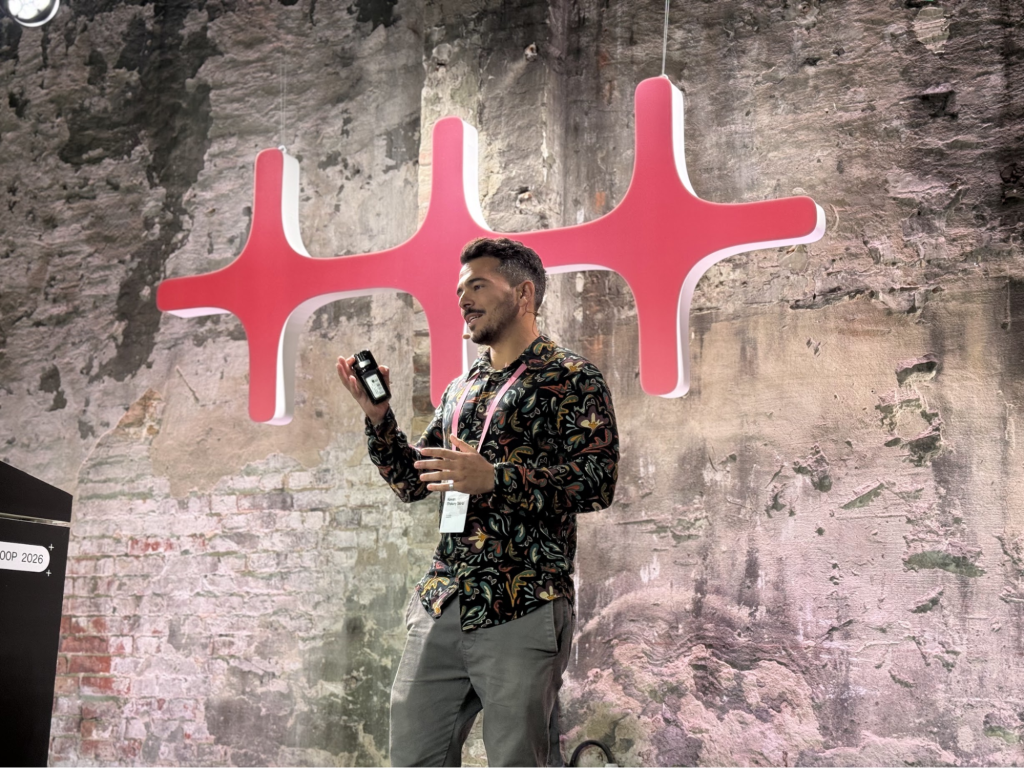
Keivan’s session covered a city administration that runs n8n’s community edition fully on-premise. No data can leave that environment. Some of the services they depend on, including healthcare systems, have no API, or one that is too expensive to use.
The program started with a workshop week and continued with eight weeks of remote support. After week one, they had several pre-production MVPs.
The city’s missing-API problem is familiar. We hit a similar wall on an enterprise systems integration project for a global pharmaceutical company. Its legacy MS Project desktop app had no easy way to integrate. We built a VBA macro and an n8n connector to bring its data into the pipeline.
Keeping workflow sprawl under control
Another session addressed a problem most growing n8n teams will recognize. Most internal workflows are built for personal use, and teams rebuild the same workflows without learning from each other. The fix was a workflow that reads, classifies and explains every other workflow and drafts its documentation. Once workflows are documented, people can query them through tools like Notion AI.
How did n8n build its own AI SDR?
It started as a human-reviewed email draft and grew into a system of hard limits, skills, parallel sub-agents and built-in escalation.
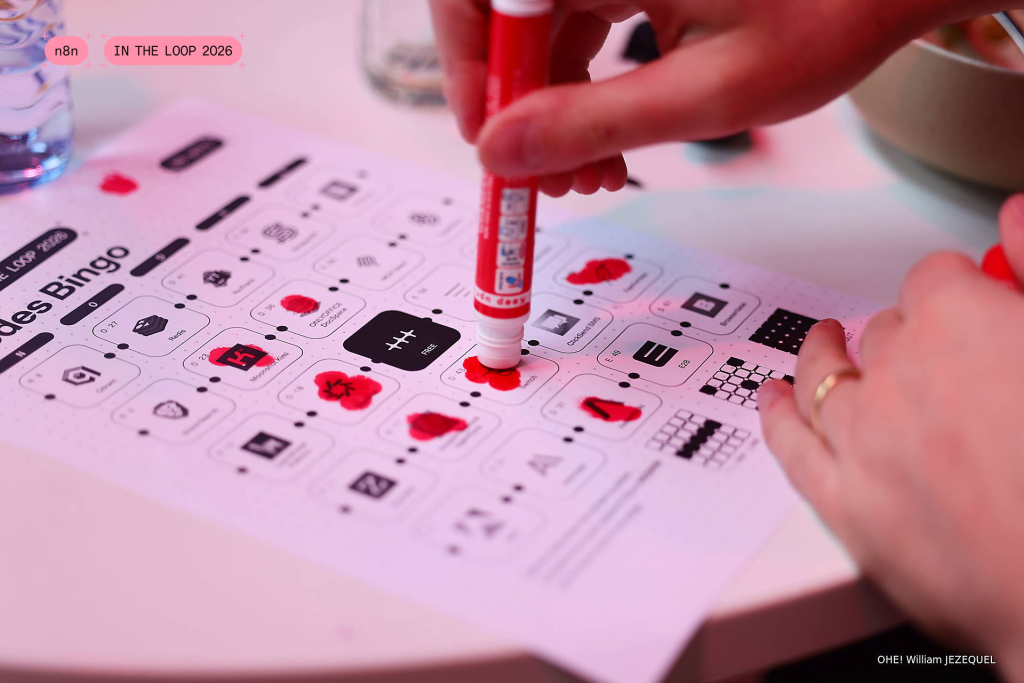
Josef Hlava, AI Automation Engineer at n8n, presented Fredie, the company’s AI SDR. It answers sales and marketing questions sent to n8n’s sales and licensing inboxes, and now runs as three agents across three products. The results: more than 10,000 conversations, more than 200 meetings booked with executives, and response time cut from 2–3 hours to 2–3 minutes. It now handles 100% of inbound.
For me, this was the most practical talk of the two days. How it’s built is the most useful part:
Phase 0 was a Chrome extension that drafted emails. A human reviewed and sent every one, with a one-click thumbs up or down.
Hard limits: a list of things the agent must never do, such as giving legal advice or calling users by phone.
Skills for plans, positioning and voice, plus a qualification playbook.
Sub-agents pull from the community forum, FAQ and other sources in parallel. Results pass through an orchestrator and an interpreter before anything reaches a prospect.
Escalation is built in. After three failed attempts, a human steps in, and the agent now decides on its own when to escalate.
By design, 74% of conversations still move to humans. Hlava’s lessons: sequence matters more than architecture, one agent shouldn’t do ten jobs, and being wrong is cheap when you start with drafts. The team runs no evals.
Where is the money? BCG's four questions
BCG’s short answer: in more output, not in hours saved.
Andrej Levin, Senior Partner, and Robin Wagner, Principal, at BCG opened with a German automotive case. Agents made procurement 56% faster. Then someone asked where the money was. Freed-up hours aren’t freed-up cash when the decision process stays the same.
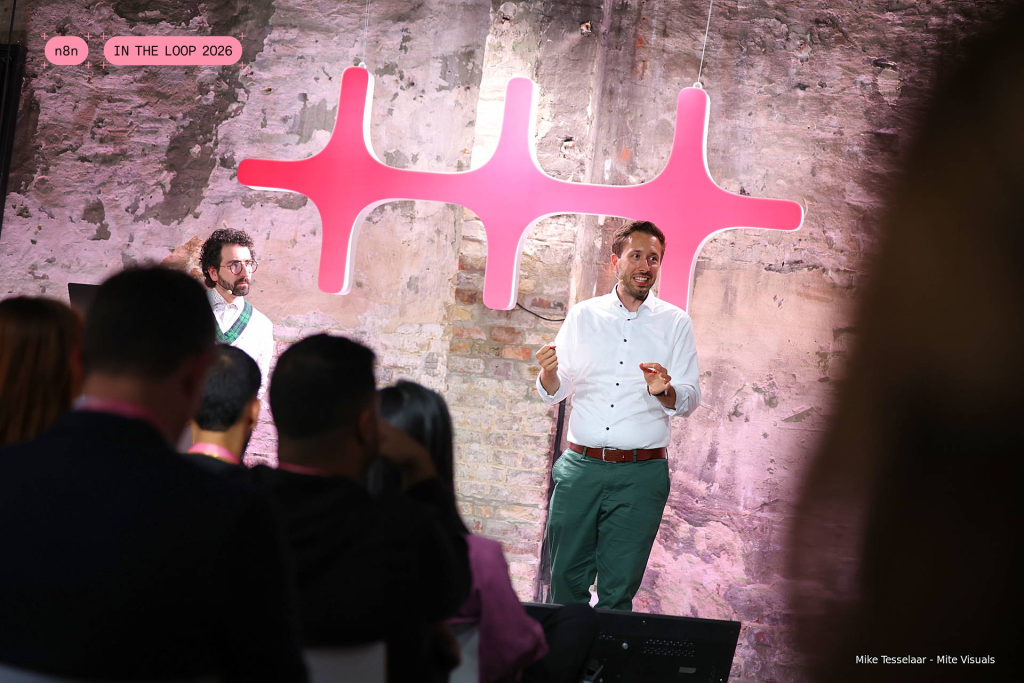
Their filter for choosing workflows:
1What can you delegate?
2Is it feasible to digitize? Do you have the data, and does it need human interaction?
3How will you prove it? Define KPIs and track real usage.
4Is the value incremental? This is the hardest one, and it needs an ambitious target.
BCG also stressed defining what “good” looks like in concrete, measurable terms. An expected effect below 5% isn’t worth their attention, and above 50% isn’t credible. In one case, P&L impact took almost two years to appear. BCG’s broader point was that about 70% of success depends on choosing the right processes and owners. They called it a people transformation more than a technology one. The best returns come from producing more output, not only from cutting operating cost. A partner session made a related point: with 95% of PoCs failing, a value dashboard and success metrics matter from the start.
What this means for CTOs and engineering leaders
Here is what I’d take back to any engineering team planning for 2027:
- Treat orchestration as infrastructure. Identity, credentials, review gates and telemetry are now first-class requirements for n8n in the enterprise, not add-ons.
- Choose processes by money, not convenience. Run BCG’s four questions before you build.
- Ship drafts before autonomy. n8n’s own SDR started as a human-reviewed email draft.
- Plan for sprawl early. Inventory and document workflows before you have hundreds of them. Ben Kiziltug’s figure of 245 workflows per organization after a year shows how fast that happens.
- Measure adoption, not just builds. Track workflows and executions, then connect them to value-based metrics. To measure the human side of adoption, I built the AI Adoption Score.
Taking automation from pilot to production is the focus of our AI business process automation work.

Tell us about your workflow. We’ll tell you what’s automatable, what isn’t, and what a realistic build looks like.
FAQ
What is n8n used for?
n8n is a workflow automation platform that connects apps, APIs and data sources into visual workflows, and increasingly runs AI agents inside those workflows. Teams use it for sales and support automation, data syncs, document processing and internal tools. It can be self-hosted, which matters for companies with strict data residency or GDPR requirements.
Is n8n ready for enterprise use?
n8n is clearly building for enterprise use. At In The Loop 2026 it reported that more than 60% of Fortune 500 companies use it and presented governance features: centralized credentials, multi-instance monitoring, OpenTelemetry, agent identities and workflow reviews. Mercedes-Benz described giving each product or organization its own n8n instance.
How do companies use n8n for AI agents?
Companies use n8n to orchestrate AI agents that call tools, other agents and MCP servers inside governed workflows. n8n’s own AI SDR runs parallel sub-agents, an orchestrator and human review. It handles all inbound sales questions, has held over 10,000 conversations, and still routes 74% of them to humans by design.
Why do most AI automation pilots fail to reach production?
BCG’s view was that most pilots fail because teams automate what is easy instead of what earns money. A partner session at In The Loop 2026 cited a 95% PoC failure rate. BCG starts with what you can delegate and how you will prove the value. It puts about 70% of success down to choosing the right processes and owners.
Can n8n run in GDPR-restricted environments?
Yes. n8n can be self-hosted on-premise, so data never leaves your environment. At In The Loop 2026, a German city administration described running n8n’s community edition fully on-premise under strict GDPR rules. After a one-week workshop, the team had several pre-production MVPs, followed by eight weeks of remote support.