Developer automation platform

Rebuilding Katara AI’s architecture for faster delivery, AI agent flexibility, and seamless multi-tenancy.

Partners with:

Website: Katara AI

Duration: Dec 2024 – ongoing

Customer location: United States, Delaware
Industry: Business/Productivity Tech
Services: Software Architecture
Tech stack: Google CloudMongoDBPython

Dedicated team behind the project

The client

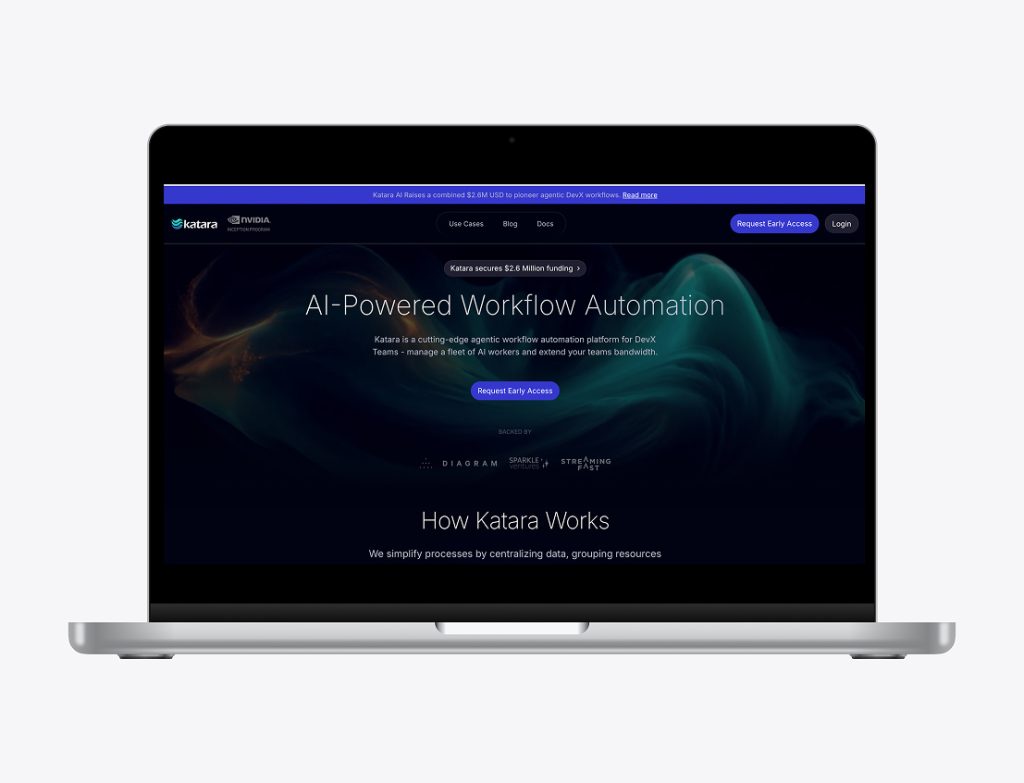
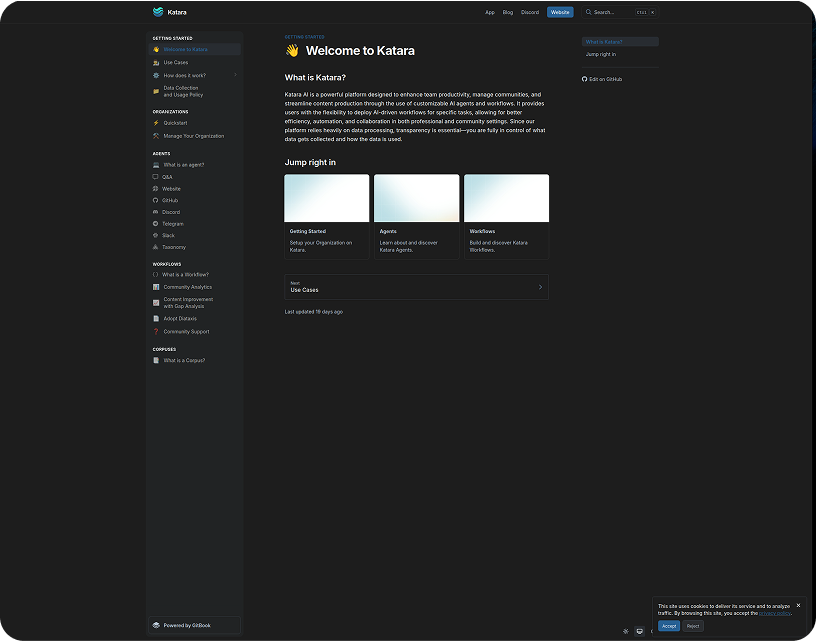
Katara AI is an AI-driven automation company with an ambitious vision – building a scalable, distributed, multi-tenant SaaS platform that can adapt dynamically to a fast-growing user base. The client’s platform is a next-generation AI-powered workflow automation platform designed specifically for Developer Experience (DevX) teams.

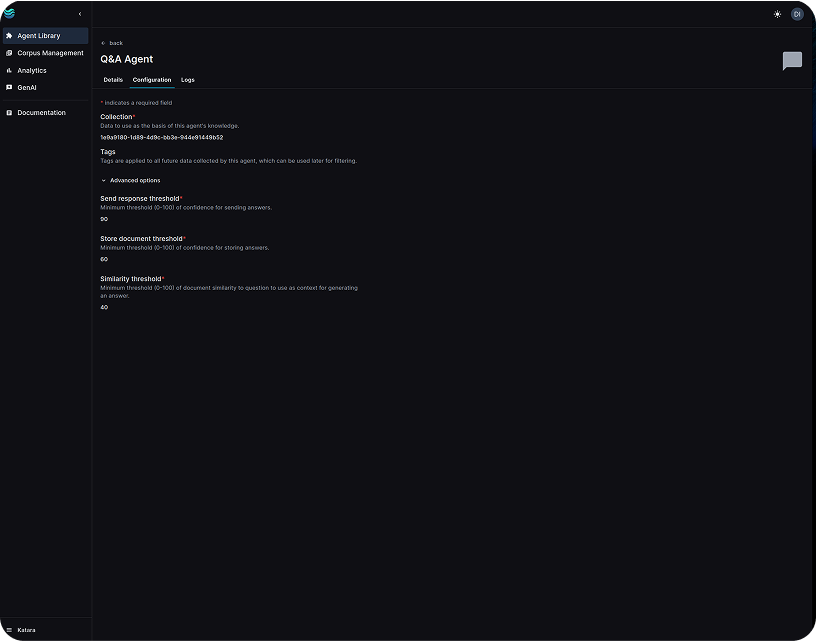
The platform allows teams to manage fleets of AI agents that automate data mining, content transformation, and cross-platform interactions. By integrating Large Language Models (LLMs) with enterprise development workflows, Katara AI streamlines processes, enhances productivity, and provides actionable insights.

Client achievements:

$2.6M raised in pre-seed and seed rounds

Katara AI raised $2.6 million in total funding to scale its agentic workflow automation platform. The $2.2 million seed round was co-led by Diagram Ventures and Sparkle Ventures, with participation from StreamingFast and others. Read more

Securing enterprise clients & adoption

$100K from Google Cloud

Katara AI secured a high-value partnership with Google, receiving:

  • $100K in Google Cloud credits to support infrastructure scaling.

Direct access to Google’s expert teams for DevOps and architectural guidance

Joined NVIDIA Inception Program

Katara joined the NVIDIA Inception program, enabling the team to build and scale its agentic automation platform faster with access to technical resources, expert support, and go-to-market benefits.

The challenge

Building an AI-powered automation platform for developers required an architecture that could handle multi-tenancy at scale, evolve rapidly without major rework, and ensure high availability for real-time interactions. However, Katara AI’s initial system architecture created significant development bottlenecks.

The platform was agent and document-aware, meaning every update required extensive modifications, slowing down delivery and making it difficult to introduce new features efficiently. Its rigid and complex design made it hard to scale, requiring a transformation to increase agility, reduce development friction, and enable continuous growth.

Interested in learning how we can assist with your unique challenges?

Contact us for more information or to discuss your needs.

Roman Rodomansky

CTO at Ralabs​​

What was done

We designed and built the initial version of Katara AI’s distributed, multi-tenant SaaS platform, focusing on scalability and development speed. Alongside platform development, we conducted an in-depth architectural review and implemented key structural changes. The shift away from a tightly coupled system improved flexibility, reduced engineering friction, and created space for faster iteration.

01

Identifying architectural pain points in the existing solution and defining a mitigation plan

  • We analyzed the system to pinpoint areas where friction was slowing down development.
  • A strategic roadmap was created to mitigate immediate issues while setting a foundation for long-term scalability.
02

Transitioning to an agent- and document-agnostic platform

  • The existing platform was tightly coupled with agent and document definitions, requiring changes at the core level for every update.
  • We initiated a transition to an agnostic architecture, shifting control to the system’s periphery.
  • This change allows new agents and document types to be introduced without modifying the core, drastically improving iteration speed.
03

Optimizing multi-tenancy & system isolation

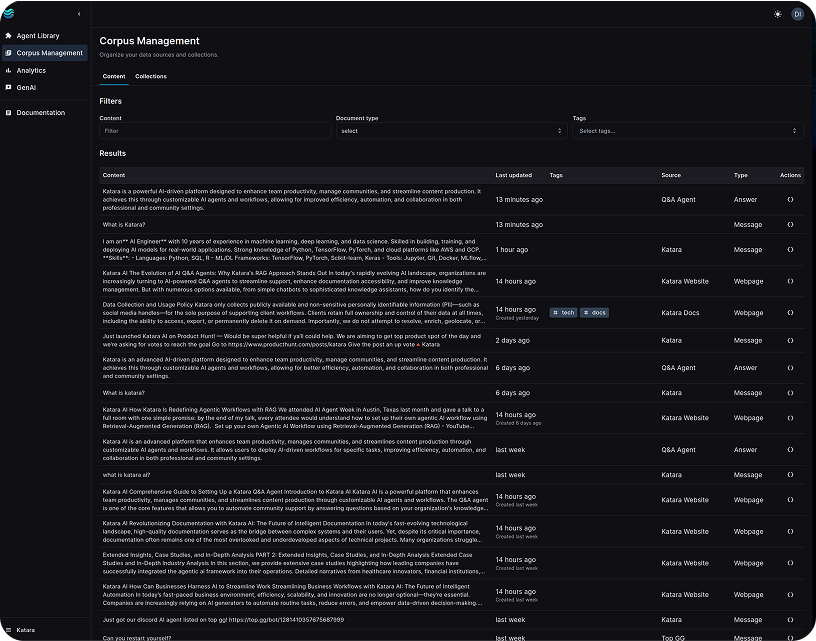
  • Strengthened authentication, authorization, and data isolation to ensure seamless and secure multi-tenant functionality.
  • Improved storage and retrieval mechanisms to optimize data integrity across different organizations.
04

Enhancing agent execution & performance

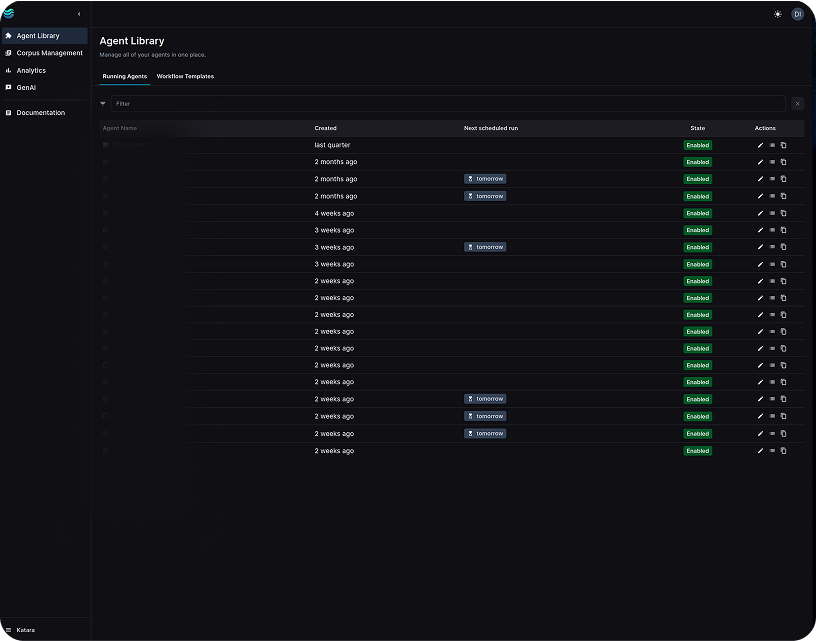
  • Improved the platform’s ability to run AI agents on-demand and on schedule for high availability.
  • Developed a generic entity service to accelerate agent implementation and reduce redundant coding efforts.

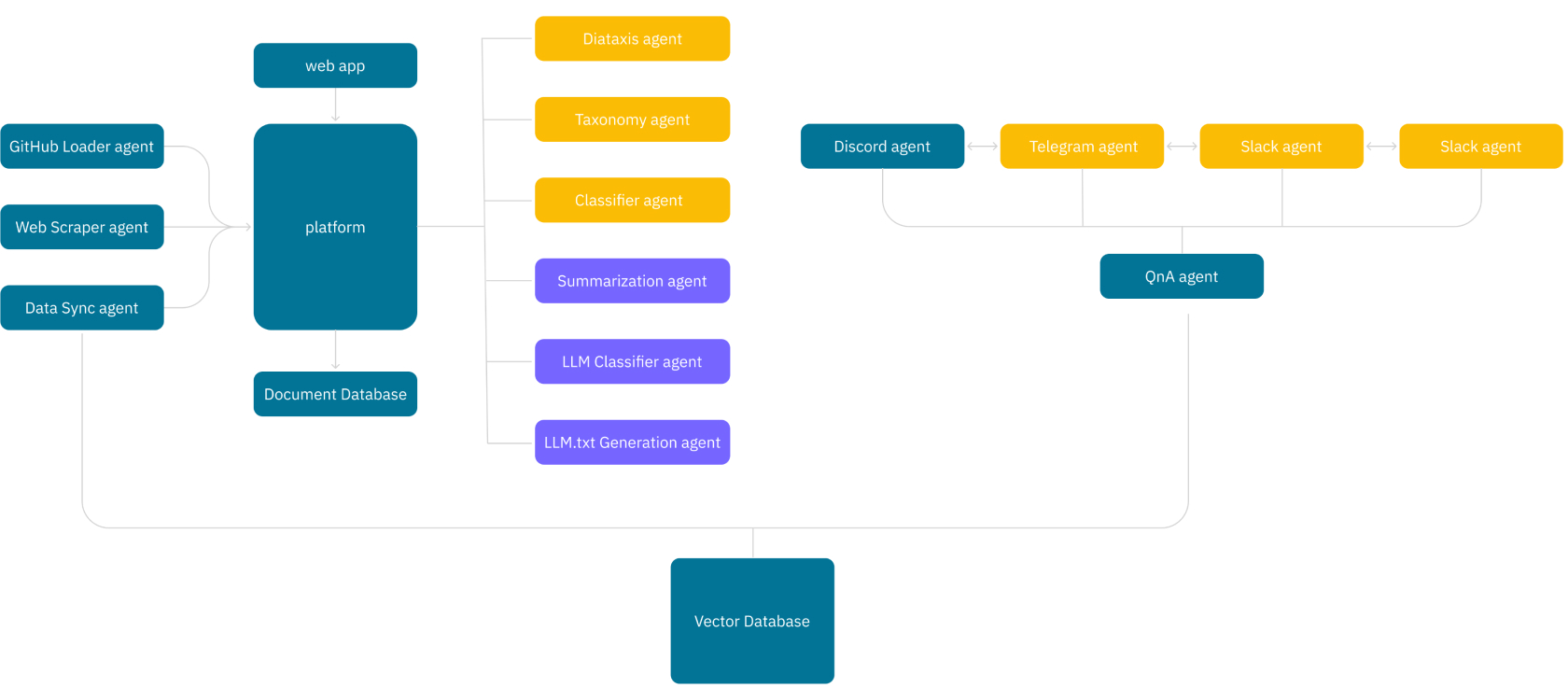
High-level architecture of Katara AI’s multi-agent platform

The agents in purple will run in an automated pipeline.

Implemented features

01

Web scraper for data mining

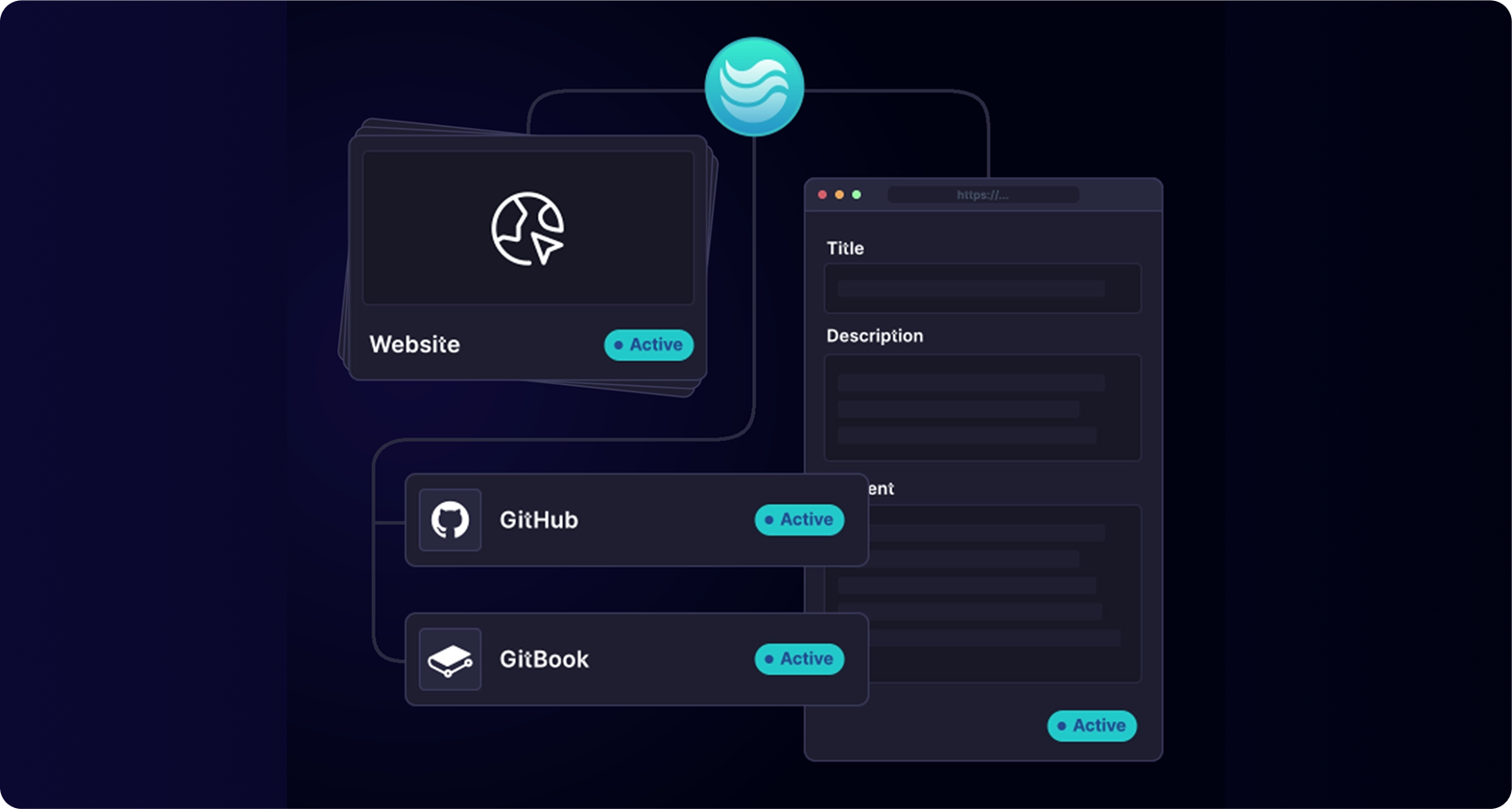
Built using GoLang and Apify, the web scraper enables Katara AI to extract structured and unstructured data from various sources. This allows AI agents to mine relevant information, improving context awareness and decision-making.

GitHub data loader

Developed in Python, the GitHub loader allows seamless ingestion and processing of repository data. This feature enables AI agents to analyze codebases, pull requests, and commit histories, providing valuable insights for development teams.

03

On-demand and scheduled AI agent execution

Using GoLang and MongoDB, we built an execution framework that enables AI agents to be triggered manually or run on a predefined schedule. This ensures efficient automation and flexibility for different DevX workflows, reducing manual intervention.

04

Generic entity service for faster agent deployment

To streamline agent implementation, we created a generic entity service in GoLang and MongoDB. This service standardizes data handling across AI agents, significantly reducing the time required to deploy and integrate new automation workflows.

05

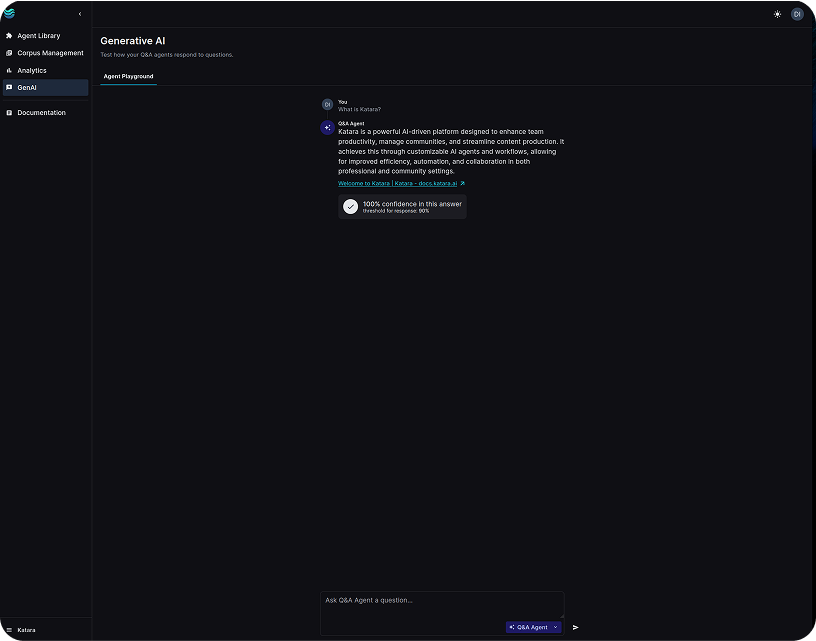
RAG playground agent for AI model testing

Built with GoLang, the RAG Playground Agent provides an isolated environment for testing Retrieval-Augmented Generation (RAG) models. This allows developers to experiment with AI-driven knowledge retrieval before full deployment, ensuring reliability and accuracy.

06

Connectors for external messaging platforms

Implemented connectors for Discord, Slack, and Telegram to enable agent interactions through real-time messaging interfaces. These integrations allow Katara AI’s agents to receive triggers, send updates, and participate in workflows directly within users’ preferred communication tools.

Results:

01

$2.6M Raised

Katara AI raised a total of $2.6 million across combined pre-seed and seed rounds to accelerate development of its agentic workflow automation platform. The $2.2 million seed round was co-led by Diagram Ventures and Sparkle Ventures, with participation from StreamingFast and other strategic angel investors. Read more
02

MVP launched in just two months

Before Ralabs joined, Katara AI had no functional product, and critical features remained incomplete since July 2024. Within two months, we successfully developed and launched the MVP, enabling the company to begin onboarding customers.

03

Prevented customer churn & enabled revenue growth

Several early adopters had been waiting for months to access the platform and were at risk of terminating agreements. By identifying and implementing the necessary features for onboarding, we secured their commitment and allowed Katara AI to begin generating revenue.

04

Strengthened multi-tenancy and system isolation

With enhanced authentication, authorization, and data isolation, the platform can now seamlessly support multiple organizations, ensuring security and performance across different environments.

05

Improved development speed with an agnostic architecture

By transitioning the platform from agent- and document-aware to agent- and document-agnostic, we removed key development bottlenecks. Now, new agents and document types can be introduced without modifying the core system, drastically reducing the time required to ship new features.

Tech stack

Let’s talk solutions

    By submitting this form, you agree to our Privacy Policy.


    Roman Rodomansky

    CTO & Co-Founder at Ralabs

    Andrii Yasynyshyn

    CEO & Co-Founder at Ralabs

    Relevant case studies

    You got it right!

    Only 21% of people can identify an accessible visual.

    Your question