Employee performance & fit prediction solution Using ML/NLP linguistic analysis
Duration: 6 months
Customer location: North Carolina, USA
Industry:AI & ML ● HR-Tech
Services:AI/ML ● Custom Software Development ● Data Services
Tech stack:IBM Watson ● ML ● Node.js ● Python (SciPy)
Dedicated team behind the project
Andrew
Lead Back-end Engineer
Dmytro
Senior Data Engineer
Andrew
Frontend Engineer
The client
The client is a company who provides data engineering services for the largest multinational investment banks with headquarters in North Carolina, having a strong presence in the banking sector. They have an R&D office that is involved in the development of SaaS products for automation and optimization of business processes around those industries.
These solutions are initially deployed across their branches for better performance and efficiency; later they expand to businesses of other industries such as sports, construction, among others, delivering them advanced workforce optimization tools.
Client achievements:
BoA was one of the first customers to test the results at one of their branches
100+ branch locations in North Carolina
200 000+ employees globally, one of largest employers in the financial sector
The challenge
The customer wanted to reduce employee turnover caused by poor fit at the department or role. They realized that a data-driven selection could strongly enhance their hiring process by identifying candidates’ strengths and aligning them with suitable departments.
The core challenge was to develop a system capable of analyzing linguistic and emotional traits in written responses, predicting not only performance but also long-term department compatibility. The idea was to implement this proof of concept in a pilot branch before scaling it across various industries.
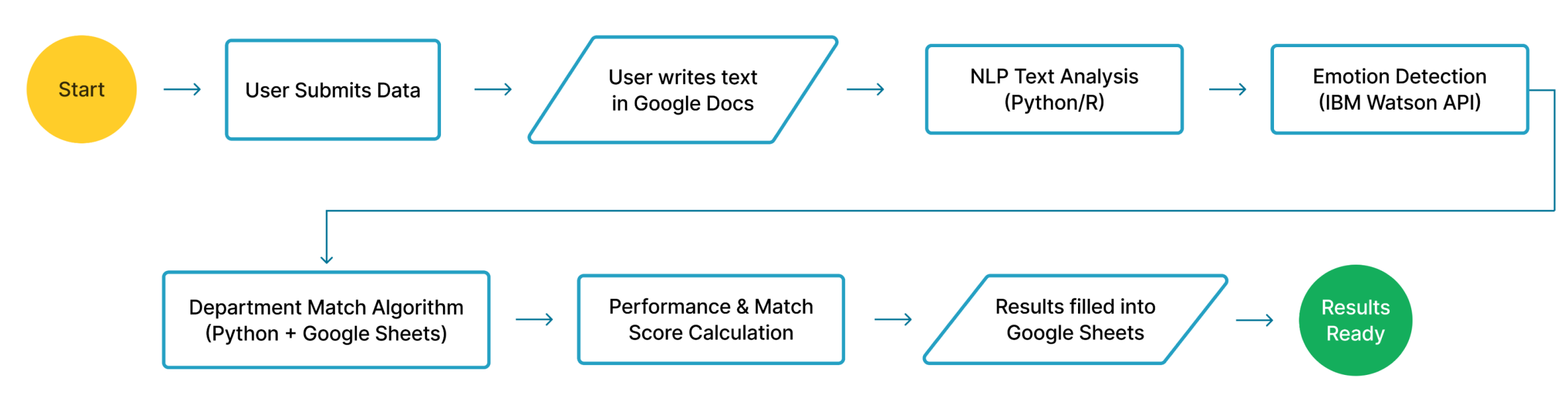
Employee Sentiment and Department Fit Analysis Flow
What was done
We developed a high-level natural language processing (NLP) and machine learning (ML)-based solution to analyze written employee responses. This system used IBM Watson’s Tone Analyzer API to capture emotional insights, which were then processed through a custom algorithm to suggest ideal department matches.
The initial proof of concept targeted one branch of the bank. Based on its success, the solution was scaled to other industries, including construction and sports, proving the approach was versatile and flexible.
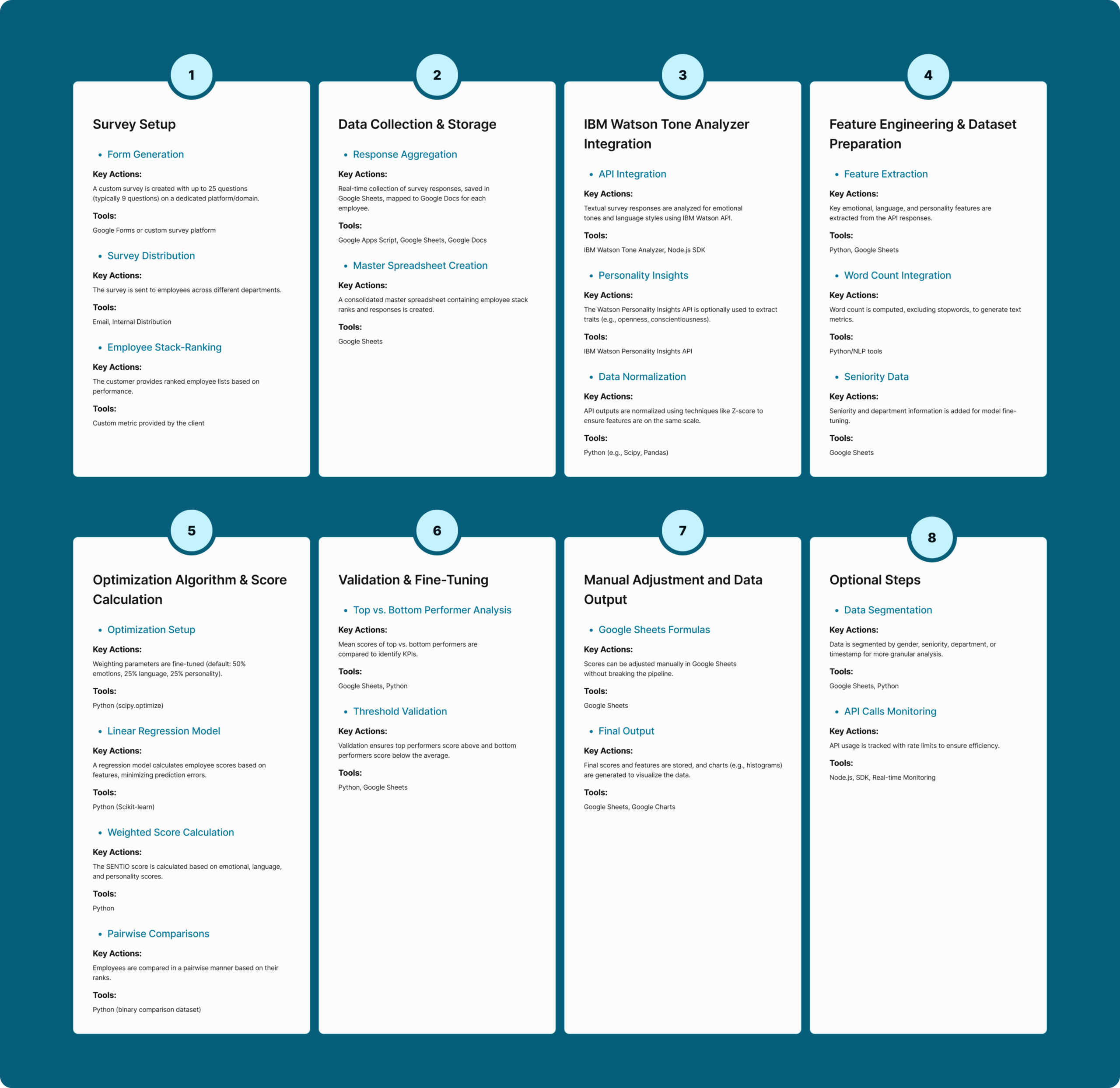
The Model Workflow
Implemented features:
01
NLP and ML-based prediction engine
We designed an engine that uses NLP to analyze written text from employees and candidates, generating performance predictions based on linguistic and emotional traits.
02
IBM Watson tone analyzer integration
Emotional analysis was implemented using IBM Watson’s API, identifying key emotions such as joy, anger, and satisfaction, which were fundamental in predicting department fit.
03
Custom algorithm design for department matching
The study management interface was restructured for better organization and efficiency. Workspace tiles on the study progress page were redesigned, financial data and study overviews were separated into distinct sections, and new industry-specific categorizations were added for studies. Updates to tax and expense forms, including QRE columns, further improved usability.
04
Google sheets and forms integration
Google Forms was used for survey collection, while Google Sheets allowed real-time processing and score adjustments, allowing the data insights to be dynamically updated.
05
Statistical modeling for performance scoring
Custom-built statistical models analyzed linguistic data to assign performance scores, offering a quantitative approach to predicting employee success within departments.
06
Automated reporting and visualizations
We provided automated reporting tools that generated detailed visual representations of employee performance and department matches, making it easier for managers to interpret and act on insights.
07
Performance and data accuracy enhancements
Heavy queries were refactored to improve performance, while state, revenue, and expense data models were updated for consistency. Validation and fallback mechanisms were added to forms to ensure data accuracy and reliability.
08
Miscellaneous features
Additional features included internal study deadline notifications, table of contents navigation on admin pages, and automated user notifications for specific document uploads.
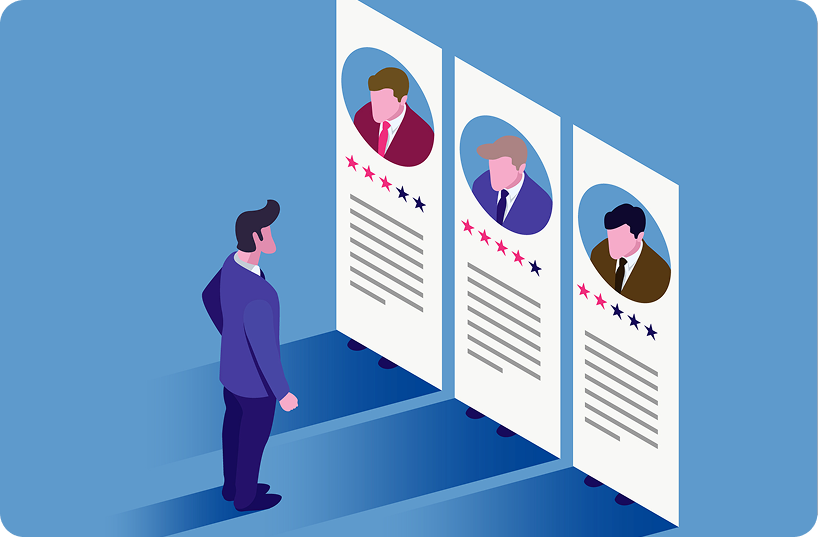
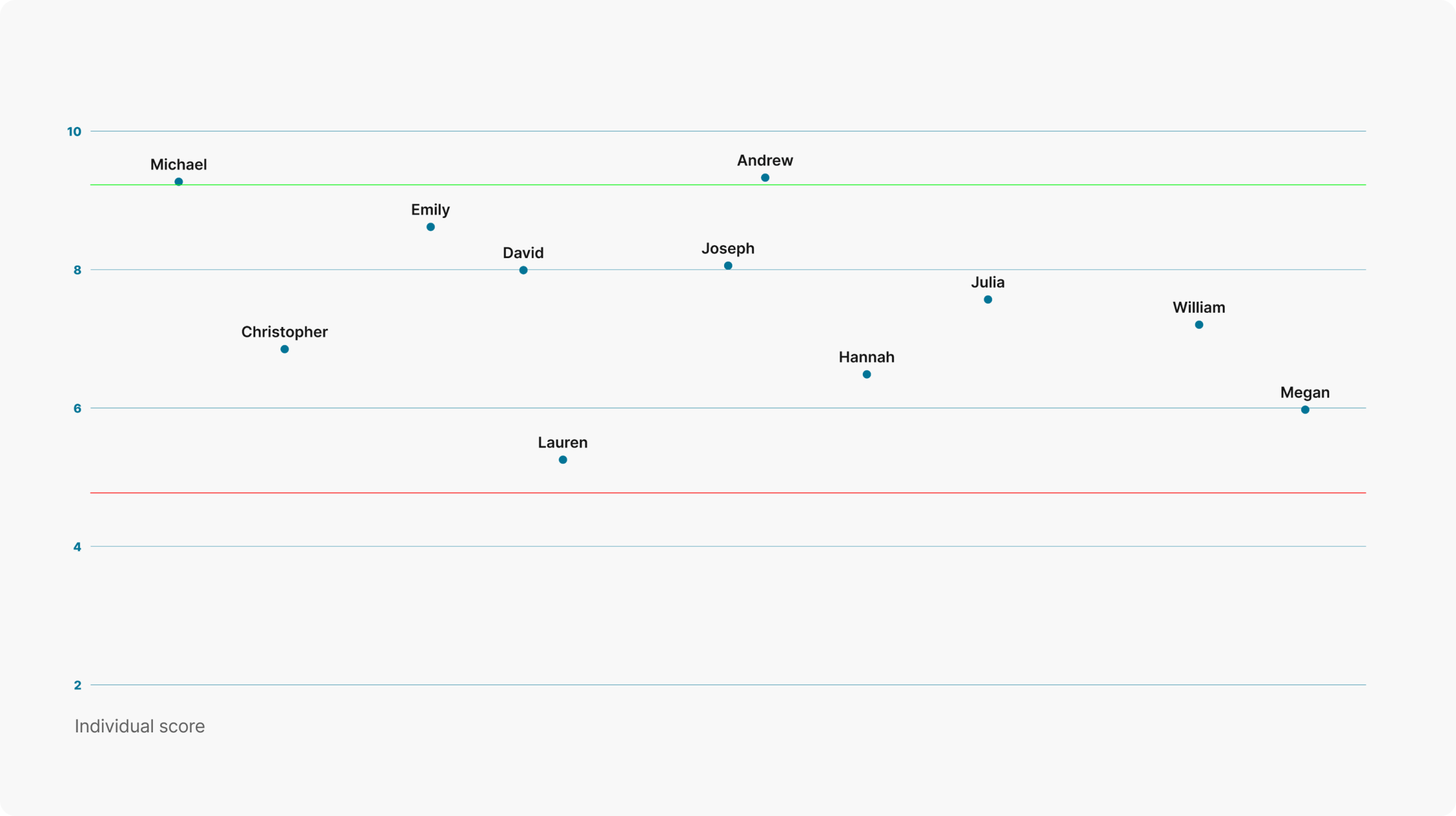
Employee Performance Ranking
Results:
01
18% reduction in turnover
After 6 months of analysis, the solution reduced employee turnover to 18%, a significant improvement from the industry average of 23.4%
02
Improved employee retention
Better department matches led to improved retention rates by aligning employees’ strengths with the right roles
03
Tested on 50 new candidates
The model was successfully tested on 50 new hires. The results showed a high correlation between the system’s predictions and actual employee performance, demonstrating the tool’s effectiveness in hiring decisions
04
Benchmarked with 400+ existing employees
Over 400 existing employees were analyzed to create a benchmark for future hiring decisions. This allowed the client to set a standard for future hires, ensuring new employees met or exceeded existing performance metrics
05
Tested across 3 industries
The solution was implemented across the banking, sports, and construction sectors. Each industry had a different candidate pipeline and headcount, but the system consistently delivered valuable insights for employee placement and performance prediction
Developed Capitalise.com, integrating financial APIs and third-party services, leading to £3.5M+ raised in Series A and the Accounting Excellence award.
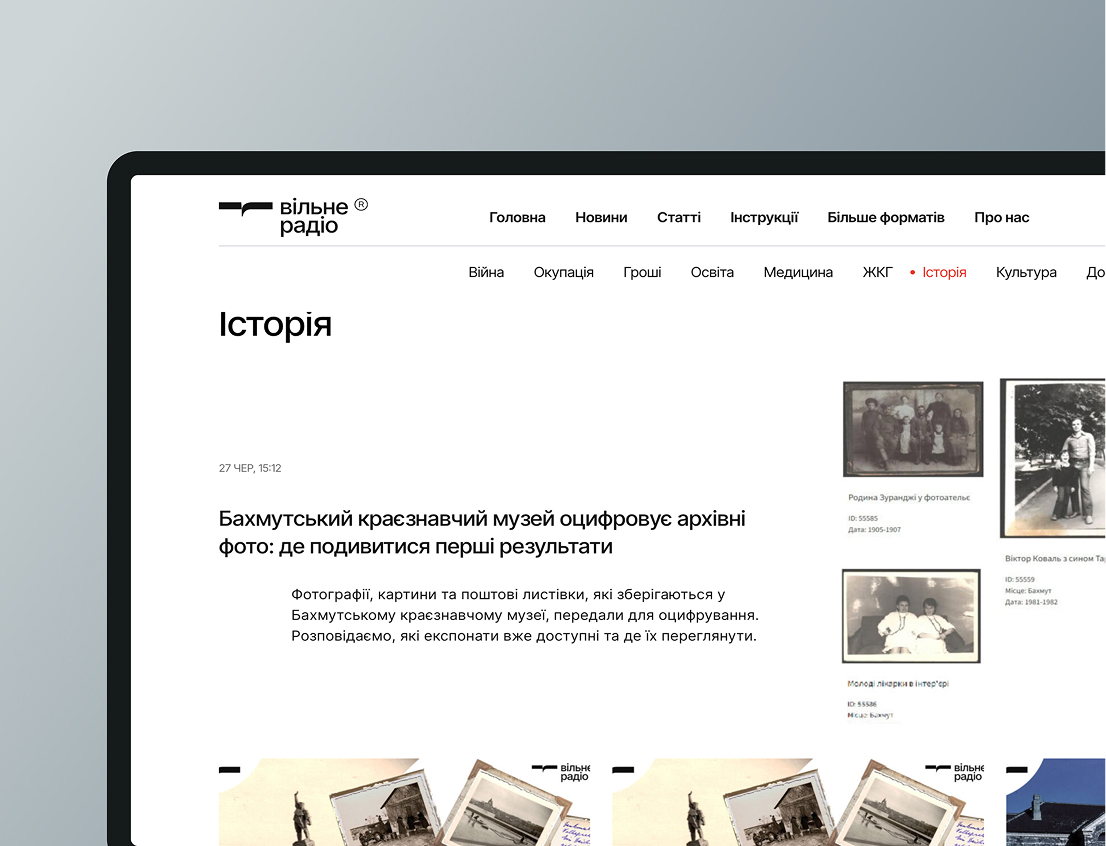
Ralabs migrated a legacy media platform to a modern WordPress-based system, designing a modular theme and automating content workflows to improve speed, editorial control, and long-term stability.
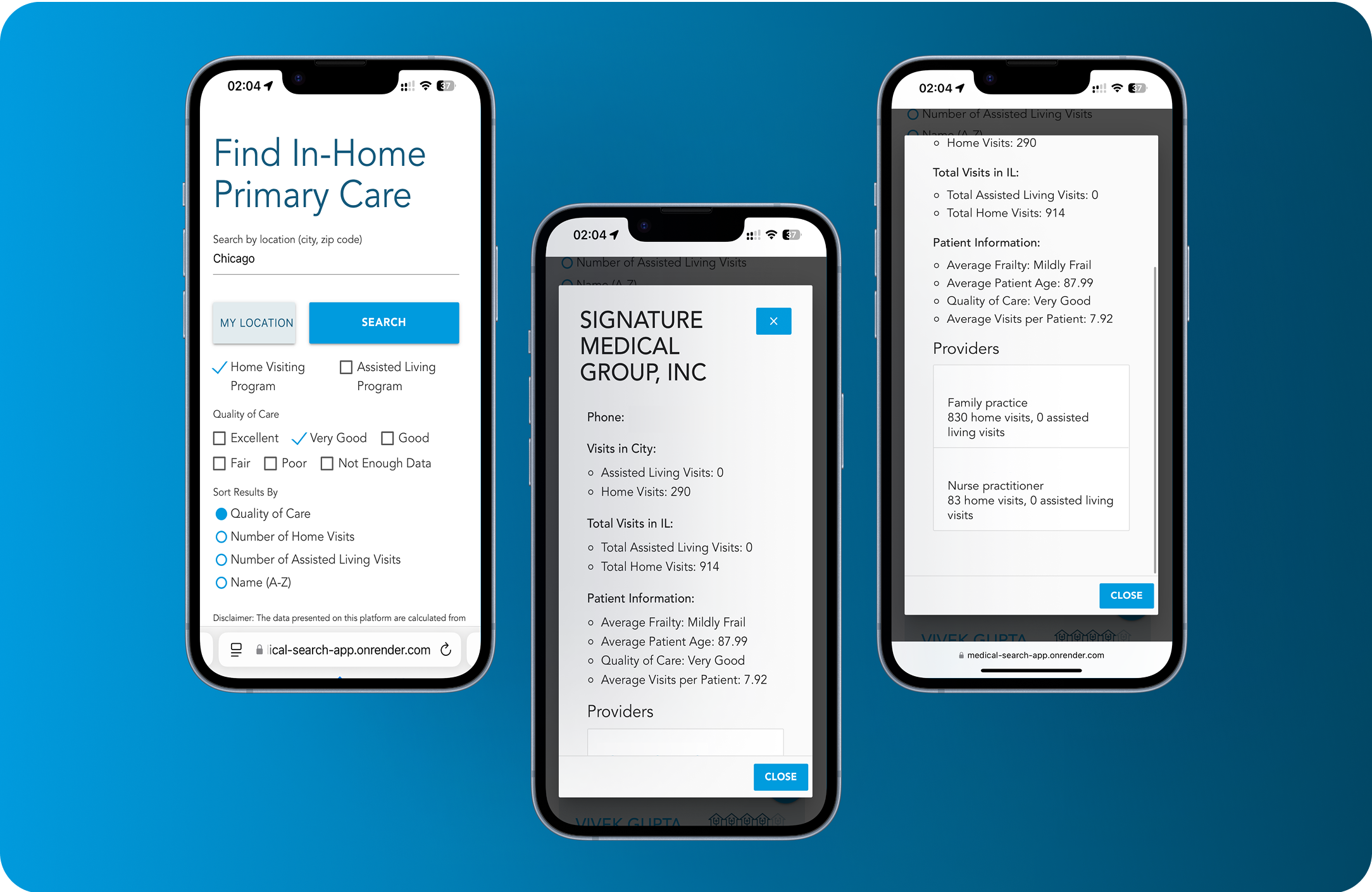
Smart Medical Search Platform for Home Visit Doctors
We launched an MVP in just one month with real‑time geolocation, Medicare data integration, and mobile‑friendly search across 100K+ practices and 200K+ providers — all under 500 ms.
Data validation as a service – accelerating client data onboarding
Ralabs helped a US fintech SaaS platform automate client data onboarding with an AI-powered validation pipeline – cutting weeks of manual work to just hours.
We helped BestBonobos replace manual, advisory-heavy M&A processes with a structured digital product. In 4 months, we delivered an MVP that automates valuations, exit-readiness scoring, and document generation, turning a complex legal journey into a guided, AI-assisted workflow.