Streamlining Data Management for Social Machines

Duration: 2023 – ongoing

Customer location: The UK

Industry: Cyber Security
Services: Custom Software DevelopmentData ServicesDevOps
Tech stack: Node (Strapi)React

Dedicated team behind the project

The client

Social Machines is a company dedicated to fostering open and resilient societies. This is achieved by studying how humans and technology collaborate, or in other words, how sociotechnical systems function. Social Machines’ expertise lies in applying knowledge and skills from behavioral and social sciences to build trust within these systems.

The challenge

Social Machines is pioneering a new approach to influencing and measuring security culture and employee behaviour change by developing an evidence based, human-centric approach to understanding the underlying cultural factors that impact behaviour choices. The client organisation needed our expertise to design and build a SaaS platform that enabled:

  • Data accessibility: efficient methods to filter and isolate relevant data and survey responses.
  • Data visualization: engaging ways to display the results from survey responses through graphics.
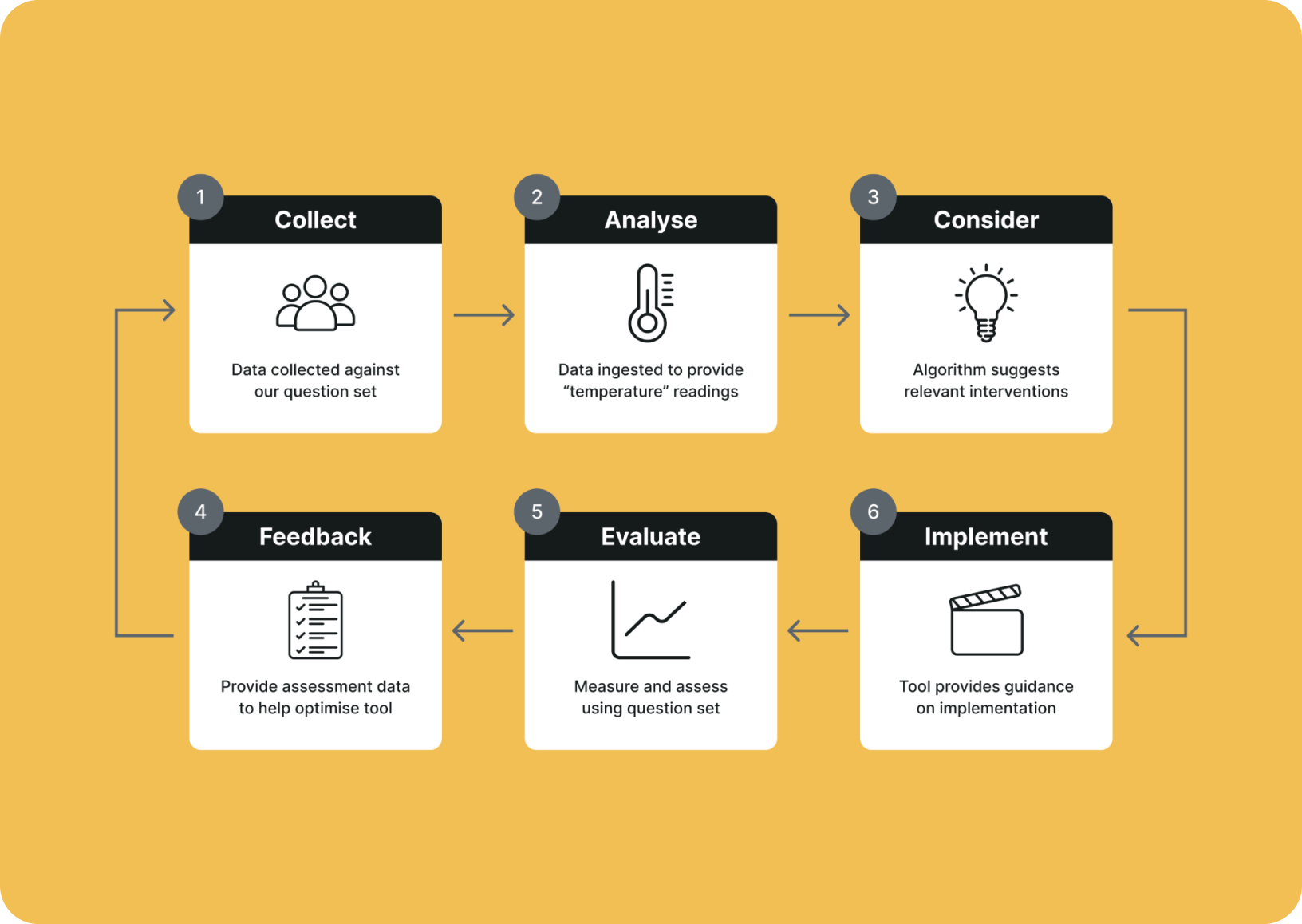
Structure for the project “Temperature”

What was done

Leveraging the Scrum methodology for iterative development and continuous improvement based on user feedback, we built a secure and scalable platform for Social Machines. We utilized Strapi, a headless CMS platform, to optimize backend development and ensure data integrity.

This platform streamlines data management for Social Machines by addressing their key challenges: Improved Data Accessibility and Enhanced Data Visualization.

Implemented features:

01

User management

A system was implemented for inviting and managing users, enabling their assignment to specific departments and teams within the platform. This streamlines user onboarding and facilitates collaboration within designated groups.

02

Survey functionality

Functionalities were introduced for creating and managing both full and pulse surveys. This empowers users to gather diverse data through various survey formats, catering to different needs and time constraints.

03

Notification system

An automated notification system was integrated to remind users to participate in surveys. This proactive approach enhances data collection efficiency by increasing response rates.

04

Data collection and visualization

Incorporated functionalities for collecting survey responses and presenting them visually through graphs and charts, empowering admins with data analysis capabilities.

05

Knowledge base

A dedicated section was established listing articles that explain different interventions. This fosters knowledge sharing and improves understanding within Social Machines, promoting a more informed user community.

Project management approach

01

LEAN development following SCRUM methodology.

02

Facilitating continuous adaptation and improvement based on ongoing feedback from Social Machines.

03

Fostering regular communication and collaboration throughout the development process.

04

Providing clear visibility into project progress and facilitating open communication regarding milestones and deliverables.

Results:

01

Improved data accessibility

Departments and teams can now efficiently access and filter data relevant to their needs, fostering better collaboration and decision-making

02

Enhanced data visualization

User responses are clearly presented through graphs and charts, enabling admins to readily analyze data and gain valuable insights

03

Streamlined workflow

The platform simplifies survey creation, user management, and data analysis, leading to increased efficiency and productivity within Social Machines

Tech stack

What the team has to say

Let’s talk solutions

    By submitting this form, you agree to our Privacy Policy.


    Roman Rodomansky

    CTO & Co-Founder at Ralabs

    Andrii Yasynyshyn

    CEO & Co-Founder at Ralabs

    Other сases

    You got it right!

    Only 21% of people can identify an accessible visual.

    Your question