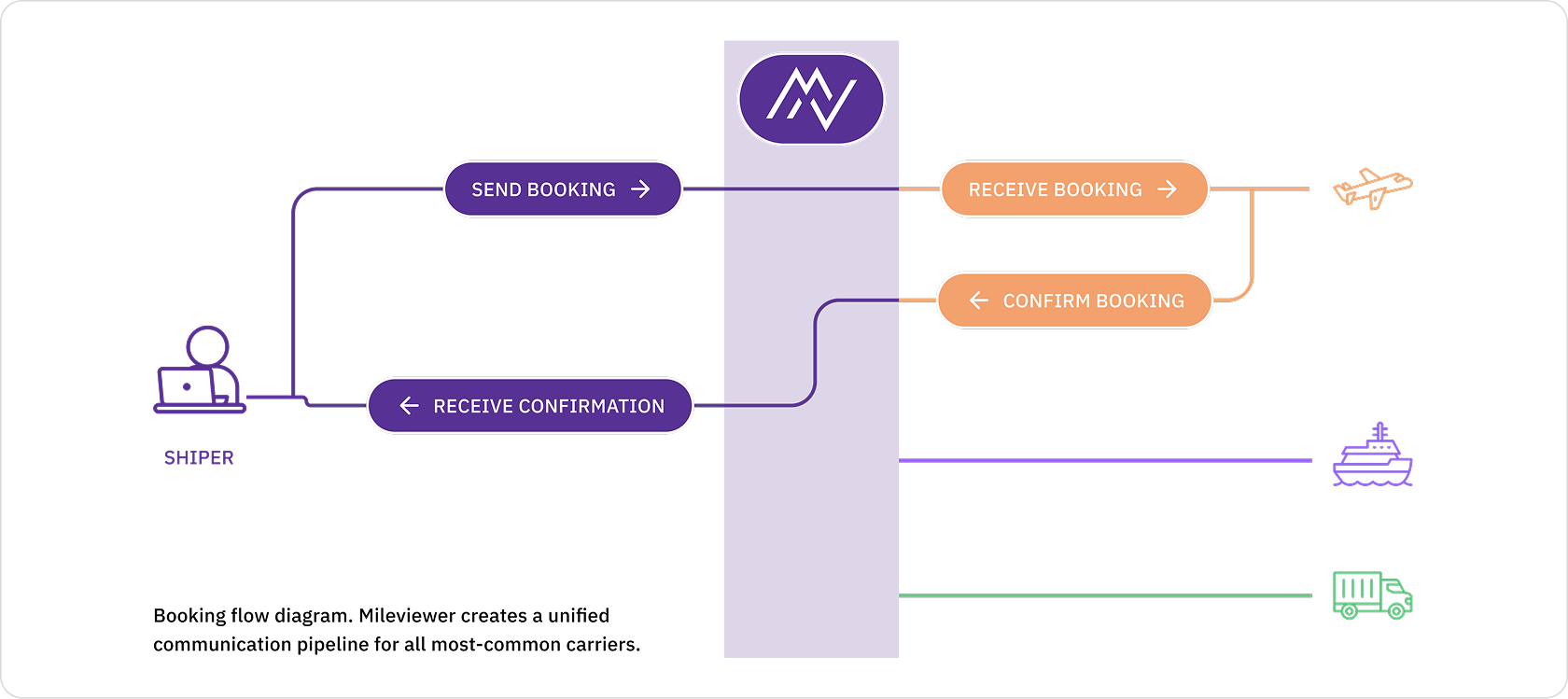
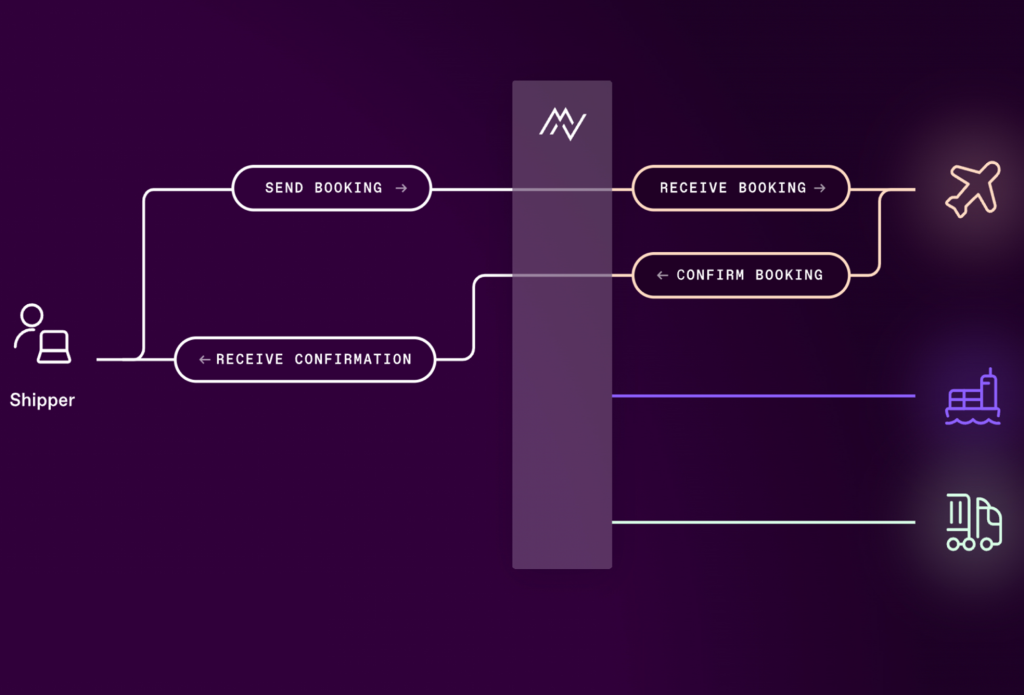
Mileviewer is a key player in the logistics industry, offering a versatile platform that integrates data and applications for shippers and logistic service providers. This platform connects major global delivery companies like UPS, FedEx, DHL, Tomra, and Maersk onto a single platform.
Mileviewer’s solution streamlines shipment tracking, label creation, booking, and other logistics functions across various carriers. Focused on the B2B market, Mileviewer provides insights into logistics processes through data integrations, enhancing shipment planning, management, and operation.
The platform’s goal is to facilitate efficient and rapid delivery within a global supply chain, ensuring commitments to business clients are met through effective supply chain solutions
The challenge
Mileviewer, a crucial intermediary between the sender and the delivery agent, faced a significant challenge in ensuring both parties could effectively track the delivery package. The core of this challenge lay in the ongoing integration process.
With a diverse range of delivery companies to integrate with, each with its own data formats and technical requirements, the task was complex. Mileviewer needed to engage with various protocols and interfaces like REST APIs, SOAP, and FTP on a daily basis.
The demand for rapid response to production issues was high. Mileviewer needed us to create an efficient monitoring, logging, and notification system to maintain service quality and address any operational challenges promptly.
What was done
To tackle these challenges, we employed a microservice architecture, utilizing Node.js and TypeScript for the backend, and React.js for the frontend. The team’s focus was on creating a flexible, scalable system that was responsive to production issues, ensured by robust monitoring, logging, and notification systems.
Implemented features:
01
Integrations with major carriers
Mileviewer successfully integrated with leading logistics companies such as CHI, Dachser, DHL, UPS, and others. This integration allowed for a unified platform capable of handling various logistics services.
02
Booking and label call
The system enabled users to book shipments and generate label calls efficiently, streamlining the process of shipment preparation.
03
Tracking
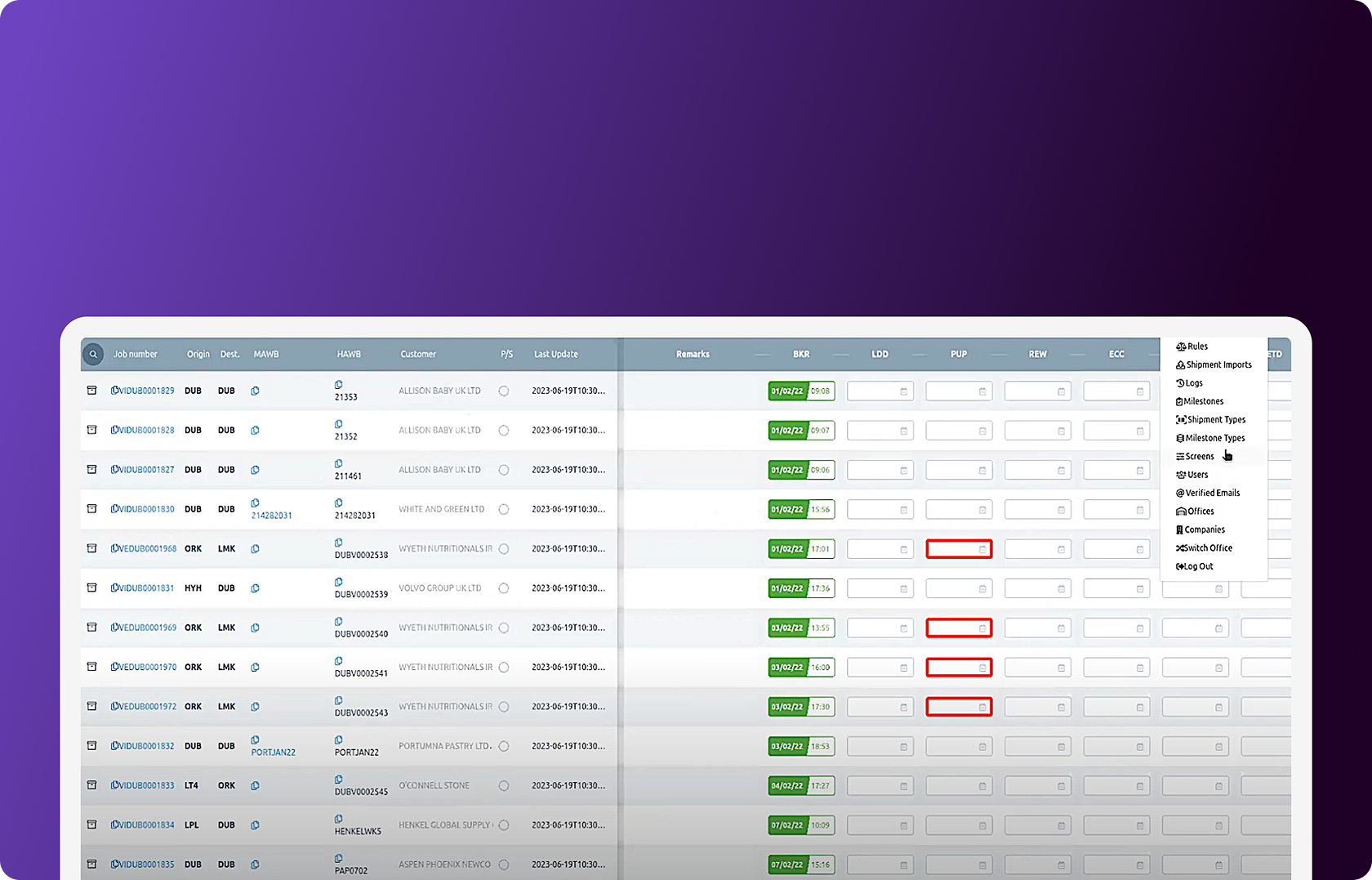
A robust tracking system was implemented, allowing both senders and recipients to monitor the real-time status of their shipments.
04
Document sharing
The platform facilitated easy sharing of essential documents related to shipments, enhancing communication and transparency between all parties involved.
05
Custom workflows
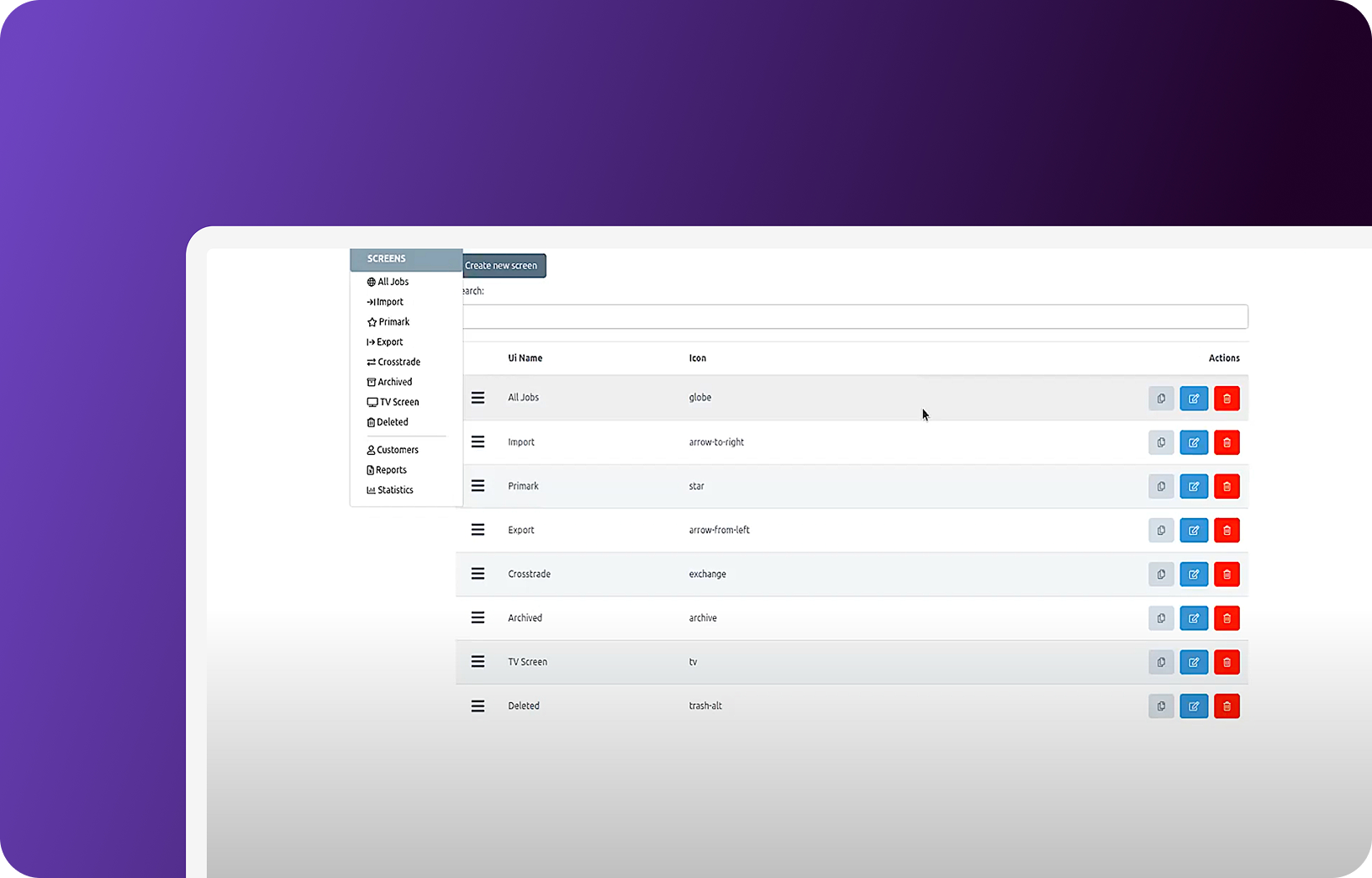
Mileviewer developed custom workflows to cater to the specific needs of different logistics providers, ensuring flexibility and efficiency in operations.
06
Label display and conversion
A significant feature was the ability to display labels, including barcodes and QR codes, and convert PDFs into ZPL files for printing. This was a unique solution, as no existing system offered direct PDF to ZPL conversion.
Project management approach
01
Scrum/Agile methodology
The team adopted Agile principles, allowing for adaptability and iterative progress in the face of evolving project requirements and challenges.
02
Two-week milestones
The project was structured around two-week sprints, enabling the team to set clear short-term goals and assess progress regularly. This approach facilitated timely deliveries and continuous improvement.
03
Regular plannings and retrospectives
Each sprint was accompanied by planning sessions to outline objectives and retrospectives to evaluate the outcomes. This ensured that lessons learned were immediately integrated into future sprints.
04
Story-points estimates
The team used story points for estimating tasks, which helped in assessing the complexity and effort required for each task, leading to more accurate planning and resource allocation.
05
Use-case diagrams
These diagrams were utilized to visually represent the system’s functionality and the interactions between different users and the system. This helped in understanding and communicating the project requirements more effectively.
06
Stakeholder registry
A comprehensive stakeholder registry was maintained, including clients and other key stakeholders. This ensured that all project activities were aligned with stakeholder needs and expectations.
Results:
01
Decreased time for new B2B integrations
Mixpanel integration now provides daily user statistics that help uncover opportunities for app improvement. This integration allows for a deeper understanding of user behavior, aiding in the refinement of features and overall user experience
02
Enhanced client communication
Achieved cleaner and faster code execution. Reduced memory usage by utilizing a single data object across processes instead of multiple copies
Tech stack
TypeScript
Next.js
Vue.js
Docker
ElasticSearch
Redis
Node.js
MongoDB
AWS
Winston.js
Swagger
React components
RabbitMQ
Nest.js
Mongoose ORM
Minio (file storage)
Jest (unit tests)
Custom cloud provider
Testimonial Mileviewer has received
Maersk’s Automation Breakthrough
“Mileviewer allows us to provide better customer service while simplifying our daily operations at the same time.”
Leaflink: Financial automation for wholesale marketplace
Ralabs helped LeafLink upgrade its financial operations with new microservices, automated reporting, and a LexisNexis integration. The platform now handles large-scale transactions with faster risk checks and smoother data workflows.
Ralabs migrated a legacy media platform to a modern WordPress-based system, designing a modular theme and automating content workflows to improve speed, editorial control, and long-term stability.
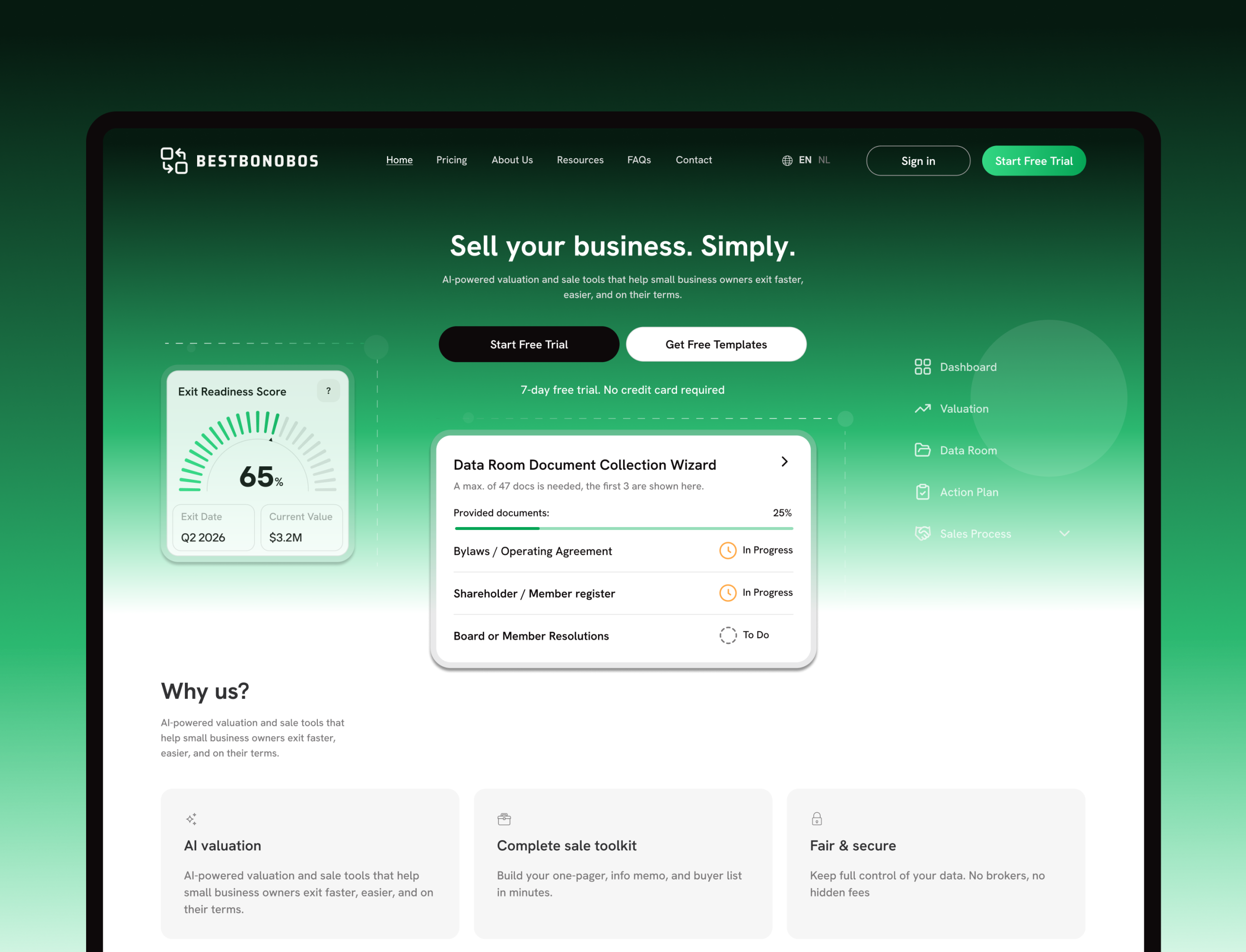
We helped BestBonobos replace manual, advisory-heavy M&A processes with a structured digital product. In 4 months, we delivered an MVP that automates valuations, exit-readiness scoring, and document generation, turning a complex legal journey into a guided, AI-assisted workflow.